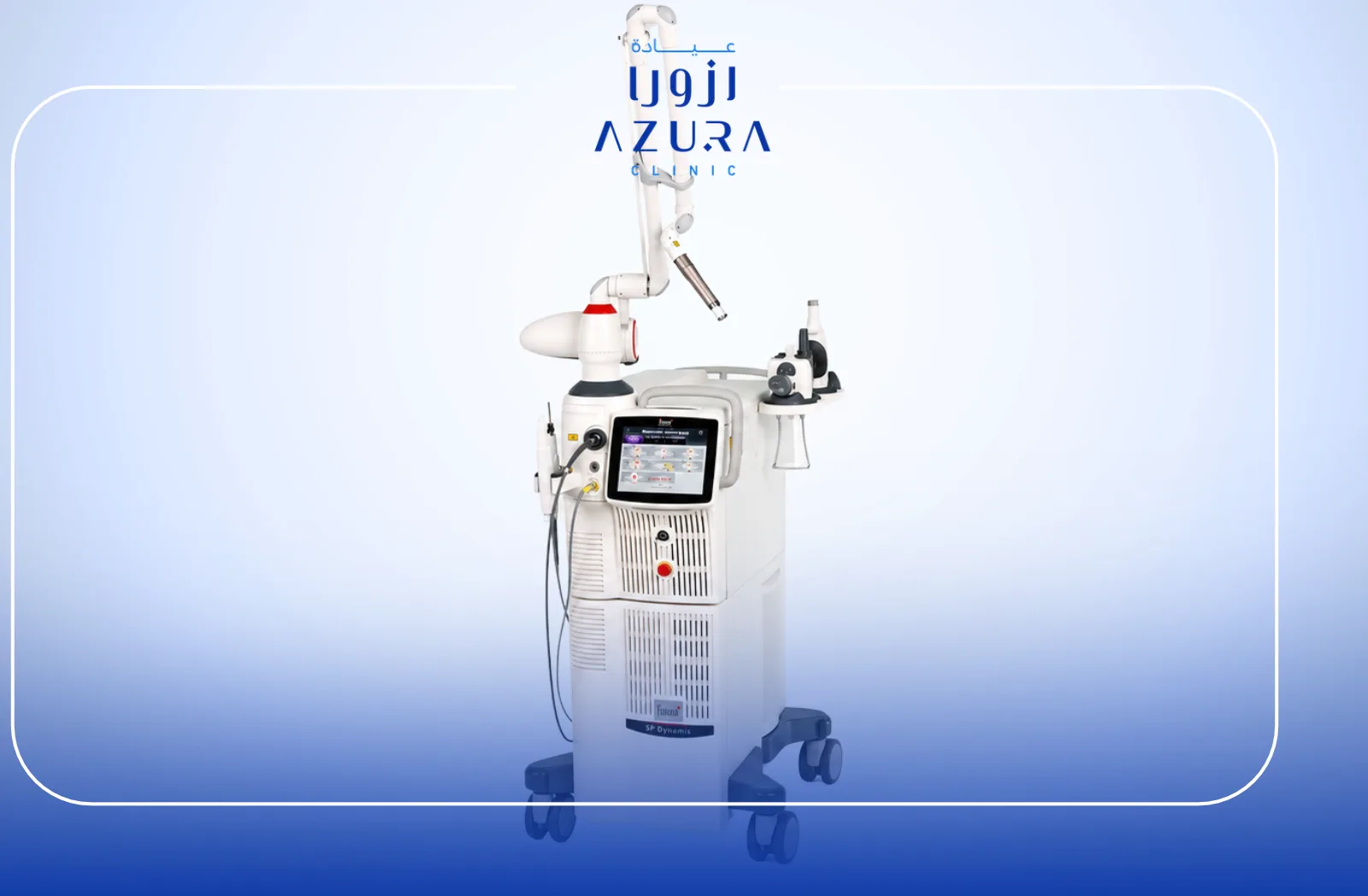
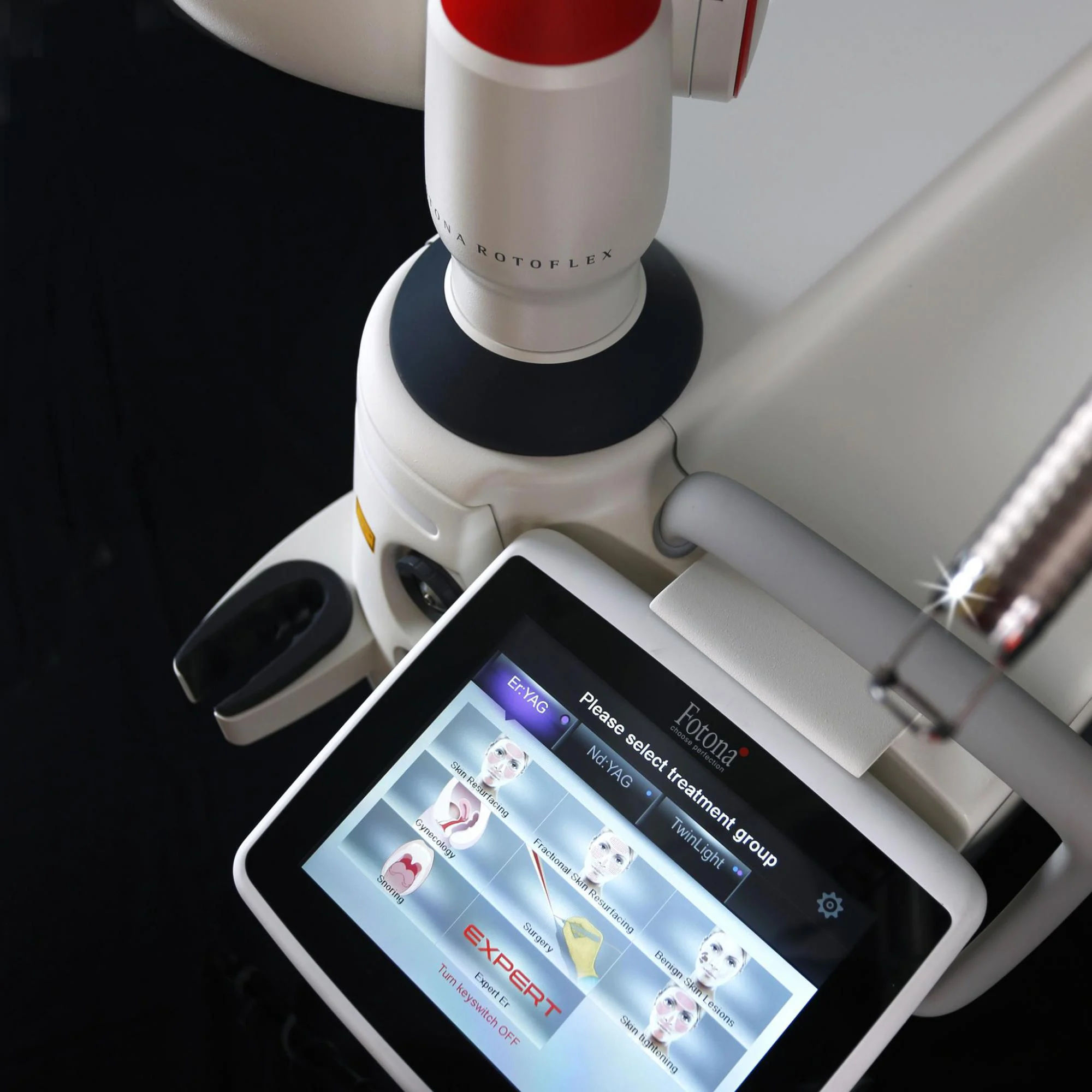
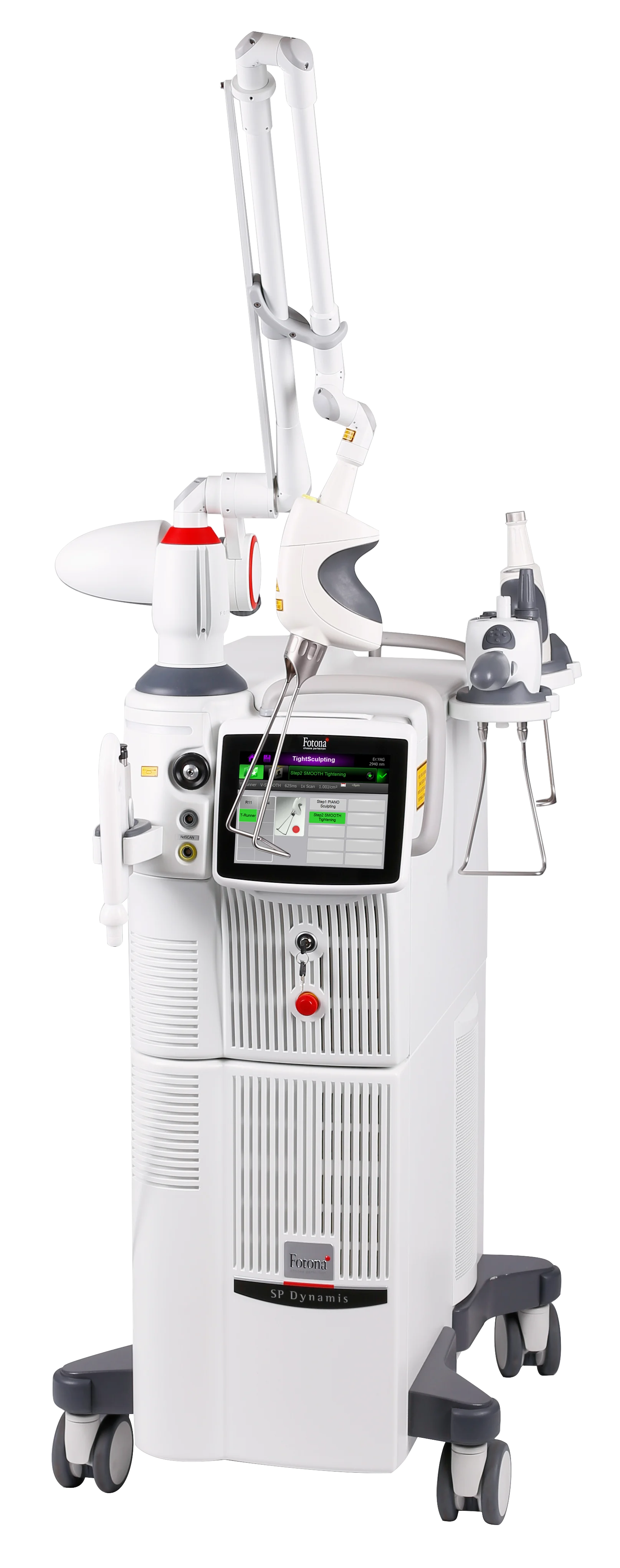
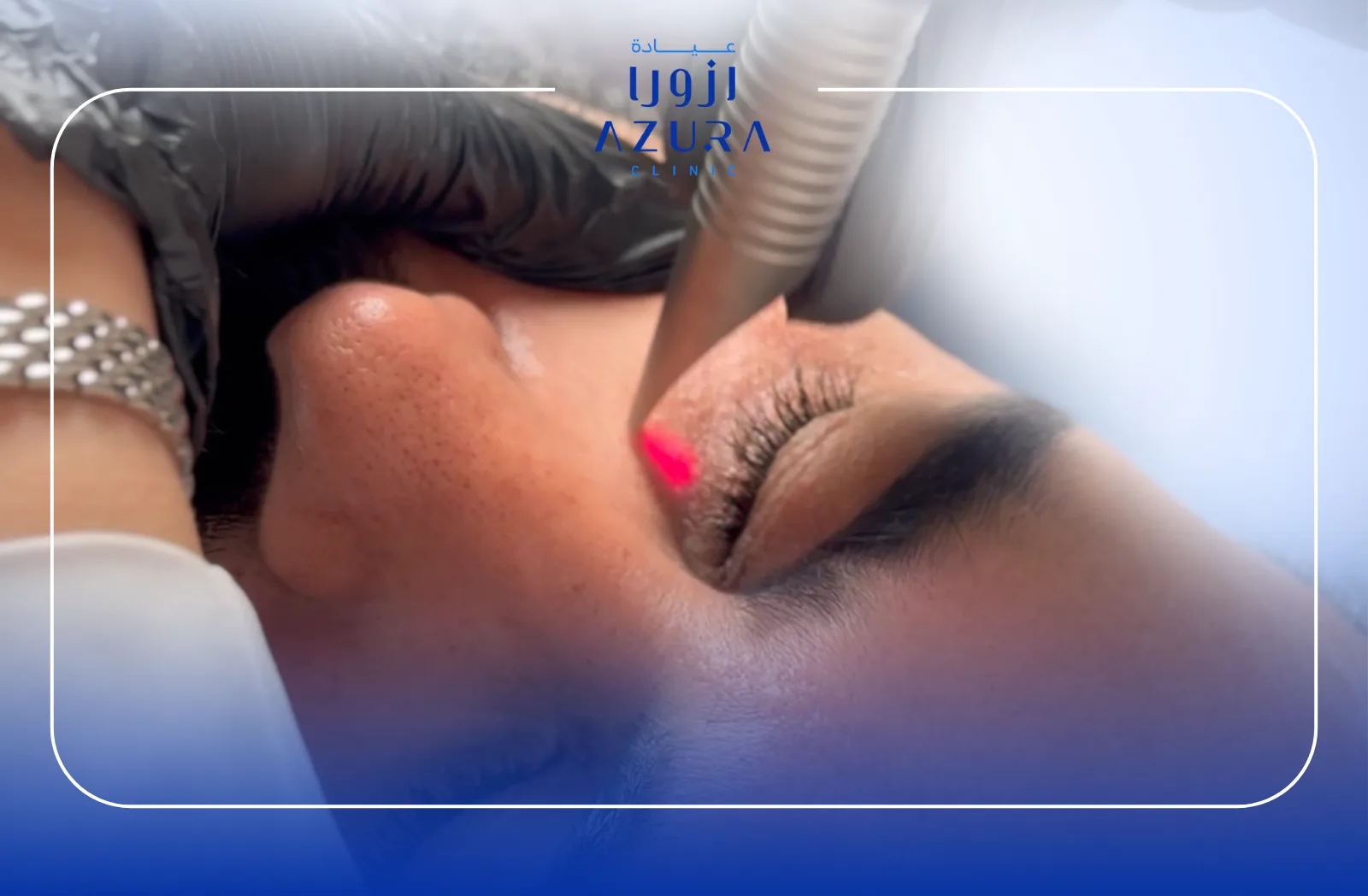
If you have been searching for a Fotona laser in Muscat, you have probably seen the name attached to almost everything: non-surgical face lifting, acne scars, under-eye bags, hooded lids, thinning hair, nail fungus and fuller lips. That long list can feel like marketing until you understand how the device works and where its real benefits come from. Fotona is a dual-wavelength laser platform, which means one machine can treat the skin surface, the deeper layers beneath it, the inside of the mouth and even the scalp, each with a different setting.
At Azura Clinic in Sarooj, our dermatologists use the Fotona SP Dynamis laser platform for face, neck, eye, lip, scalp, scar and body treatments. This guide explains the key Fotona benefits and answers the questions patients across Muscat and Oman ask us most: what Fotona does, which treatment fits which concern, whether it is safe for medium and deep skin tones, how it feels, how many sessions you need and what results to expect.
Key Fotona benefits for patients in Muscat
Because Fotona combines two laser wavelengths with precise pulse control, it offers several benefits over single-purpose lasers:
Two wavelengths in one treatment: surface renewal and deep tightening can be combined in a single session.
Non-surgical and needle-free options: most Fotona treatments need no injections, incisions or general anaesthesia.
Minimal downtime: most patients return to work and daily life the same day.
Suitable for medium and deep skin tones: with the right settings, the pigmentation risk is lower than with many other lasers.
Natural-looking results: Fotona works with your own collagen, so changes build gradually.
One platform for many concerns: face, neck, eyes, lips, scalp, scars, nails and skin growths can be treated in one clinic, often in a combined plan.
What is Fotona laser and how does it work?
Fotona is a Slovenian medical laser company that has been building lasers since 1964. The SP Dynamis combines two laser wavelengths that behave very differently in the skin, and the doctor chooses between them, or uses both in sequence, depending on the problem.
Er:YAG (2940 nm): absorbed almost entirely by water in the top layer of skin. It can remove an extremely thin layer of cells with very little heat spreading sideways, which suits fine lines, rough texture, scars and dull skin.
Nd:YAG (1064 nm): travels deeper and gently heats the dermis and the tissue beneath it while leaving the surface intact. This heat tightens existing collagen, encourages new collagen and calms overactive oil glands.
What sets Fotona apart is its Variable Square Pulse (VSP) technology, which controls the shape and length of each laser pulse. With it, the same Er:YAG beam can work as a cold, feather-light peel or as a non-ablative heating pulse that never breaks the skin, and the Nd:YAG beam can deliver anything from a short fractional pulse to a long, slow warming pulse. These settings have names you will see in treatment plans: SMOOTH®, PIANO®, FRAC3® and SupErficial™.
What can Fotona laser treat?
Most people arrive at our clinic with one of these concerns, and each has its own Fotona protocol:
Sagging and loss of jawline definition: tightening from inside and outside the face with Fotona 4D.
Smile lines and nasolabial folds: treated from inside the mouth to firm the tissue that supports the fold.
Neck lines, loose neck skin and double chin: deep Nd:YAG heating to tighten the skin and reduce fullness under the chin.
Crow’s feet, crepey lids and under-eye puffiness: SmoothEye® tightens the delicate skin around the eyes.
Low brows and hooded upper lids: VectorLift® lifts the brow area without surgery.
Active acne and oily skin: the Nd:YAG wavelength calms overactive oil glands.
Acne scars, surgical scars, enlarged pores and rough texture: fractional and resurfacing Er:YAG.
Dull skin, uneven tone and dark underarms: gentle Er:YAG laser peeling.
Thinning hair: HAIRestart® stimulates the scalp and hair follicles.
Thin or dehydrated lips: LipLase® plumps the lips without needles.
Nail fungus, warts and skin tags: targeted laser treatment without cutting.
Fotona 4D: the non-surgical face lift in Muscat explained
Fotona 4D is the treatment most people mean when they search for Fotona. It is called 4D because it works on the face in four steps, each targeting a different layer:
SmoothLiftin™: Er:YAG applied gently inside the mouth. The heat contracts collagen behind the smile lines and cheeks, giving subtle filler-like support from within.
FRAC3®: Nd:YAG pulses that improve deeper imperfections and overall skin quality.
PIANO®: a long Nd:YAG pulse that warms the deeper layers evenly to tighten tissue and stimulate collagen.
SupErficial™: a light, cold Er:YAG peel that leaves the surface smoother and brighter.
All four steps are done in a single visit, without anaesthetic, and most people return to their normal routine the same day. The biggest benefit of Fotona 4D is that it improves lift, firmness and skin quality together, without needles or surgery.
Fotona 4D for men follows the same layered approach, adjusted for male skin, which is thicker, oilier and tends to have larger pores. It suits men who want a sharper jawline and better skin texture without injections. Full details and candidacy are on our Fotona 4D facelift in Muscat page.
“Fotona 4D works because each step addresses a different layer of the face. The intraoral non-ablative Er:YAG step contracts collagen from within, PIANO delivers controlled bulk heating to the deeper dermis, and the fractional and superficial passes refine texture and tone. Combining them lets us stimulate neocollagenesis across several tissue depths without creating a surface wound. Collagen remodelling is a gradual biological process, so we assess the outcome over the course of treatment, not immediately after a session.” Dr. Mona Negm, Specialist Dermatologist, Azura Clinic
Fotona 4D before and after: what to expect
Many patients notice fresher, brighter skin soon after treatment. Firmness and definition then improve gradually as the skin rebuilds its own collagen, so the change looks natural and is easiest to see when before and after photos are compared at the end of a course. Results vary from person to person, and your doctor will review your progress along the way.
Neck, double chin and skin tightening
The neck ages quickly and is often ignored in facial treatments. Fotona neck rejuvenation uses deep heating and light resurfacing to soften horizontal neck lines and tighten crepey skin. For fullness under the chin, double chin laser treatment with Fotona uses long-pulse Nd:YAG to heat the area, helping to reduce fat and firm the skin above it. Fotona skin tightening applies the same principle to areas of mild laxity on the face and body.
Eyes, brows and lips: SmoothEye, VectorLift and LipLase
The skin around the eyes is too thin for many lasers, which is why Fotona has a dedicated protocol. SmoothEye laser for under-eye wrinkles uses non-ablative Er:YAG to tighten the lids and reduce fine lines and mild puffiness, with little to no downtime.
Fotona VectorLift for brows and upper lids works in three areas: the forehead, the eyelid and the scalp. The scalp is connected to the SMAS layer that supports the face, so tightening it acts as an anchor for the lift. It is done under local anaesthetic as a short course, most people return to work the same day, and it can be combined with Fotona 4D for a fuller upper and lower face plan.
LipLase lip plumping uses gentle Er:YAG heat to stimulate collagen in the lips for a softer, more hydrated look, which suits people who want a natural change without filler.
Fotona for acne, scars, pigmentation and skin texture
For active breakouts, the Nd:YAG wavelength gently heats and calms overactive oil glands, while Er:YAG smooths the surface. This combination needs no medication and recovery is quick. Learn more about our Fotona laser for active acne.
For scars and enlarged pores, the fractional protocol prepares the skin with FRAC3®, then creates microscopic Er:YAG channels that trigger repair, and finishes with a light peel. It is designed for all skin colours. Acne, trauma and burn scars are covered in Fotona scar reduction, and scars after operations or C-sections in Fotona surgical scar treatment. Brown marks left after acne are post-inflammatory hyperpigmentation, and red or pink marks are vascular, so the doctor plans for each type separately.
Melasma is common in Oman and needs extra care, because aggressive heat can make it darker. Gentle Fotona settings can be part of a medical melasma treatment plan, alongside prescription creams and daily sun protection. Melasma can be controlled well, but it is not cured, so maintenance is part of every plan.
HAIRestart: Fotona for thinning hair
Fotona HAIRestart for hair loss uses the non-ablative SMOOTH® mode of Er:YAG on the scalp, so the skin is never broken and no needles are used. The gentle heat activates cell signalling and growth factors, improves blood flow around the hair papilla and encourages resting (telogen) hairs to move into the growth (anagen) phase sooner. Over a course of sessions, many patients notice thicker, fuller-looking hair. Depending on the cause of the shedding, the doctor may pair it with PRP for hair loss.
“Hair thinning rarely has a single cause, so every HAIRestart plan starts with a proper diagnosis of the shedding pattern and the scalp, and further investigation when it is needed. The non-ablative Er:YAG mode delivers controlled heat to the scalp without breaking the skin, which stimulates the follicular microenvironment and supports the shift of resting follicles into the active growth phase. It works best as part of a medical hair loss plan, and it is a valuable option for patients who prefer a needle-free treatment or who have not responded fully to other therapies.” Dr. Mehri Maghsoodi, Specialist Dermatologist, Azura Clinic
Nail fungus, warts and skin tags
Fungal nail infections are notoriously slow to clear with creams. Fotona laser for nail fungus uses Nd:YAG to heat the nail bed and reach the fungus beneath the nail plate, with no downtime. For warts and skin tags, Fotona laser removal of warts and skin tags vaporises the lesion precisely with minimal bleeding.
Fotona laser in Muscat at Azura Clinic: every treatment at a glance
Is Fotona laser safe for darker skin and for Muscat’s summer?
This is one of the most important questions for our patients, because most have medium to deep skin tones that can react to heat or injury with dark patches. Fotona is a good fit for many of them for two reasons. The Nd:YAG wavelength is absorbed far less by melanin than shorter wavelengths, so it can heat the deeper layers while sparing the pigment at the surface. The Er:YAG steps are very shallow and cause little heat spread.
Because of this lower pigmentation risk, Fotona 4D is one of the few rejuvenation treatments many clinics continue through the summer, which is a real benefit in a city like Muscat. Because the sun here is strong all year, we still adjust settings for each skin type, avoid treating freshly tanned skin and ask every patient to follow strict sun protection afterwards. You can read more about how resurfacing lasers work and their general risks in the Cleveland Clinic guide to laser skin resurfacing.
One important exception: if you have a mole or dark spot that is new, growing, bleeding or changing shape or colour, it needs a medical skin examination before any cosmetic laser treatment.
Does Fotona laser hurt, and what is the downtime?
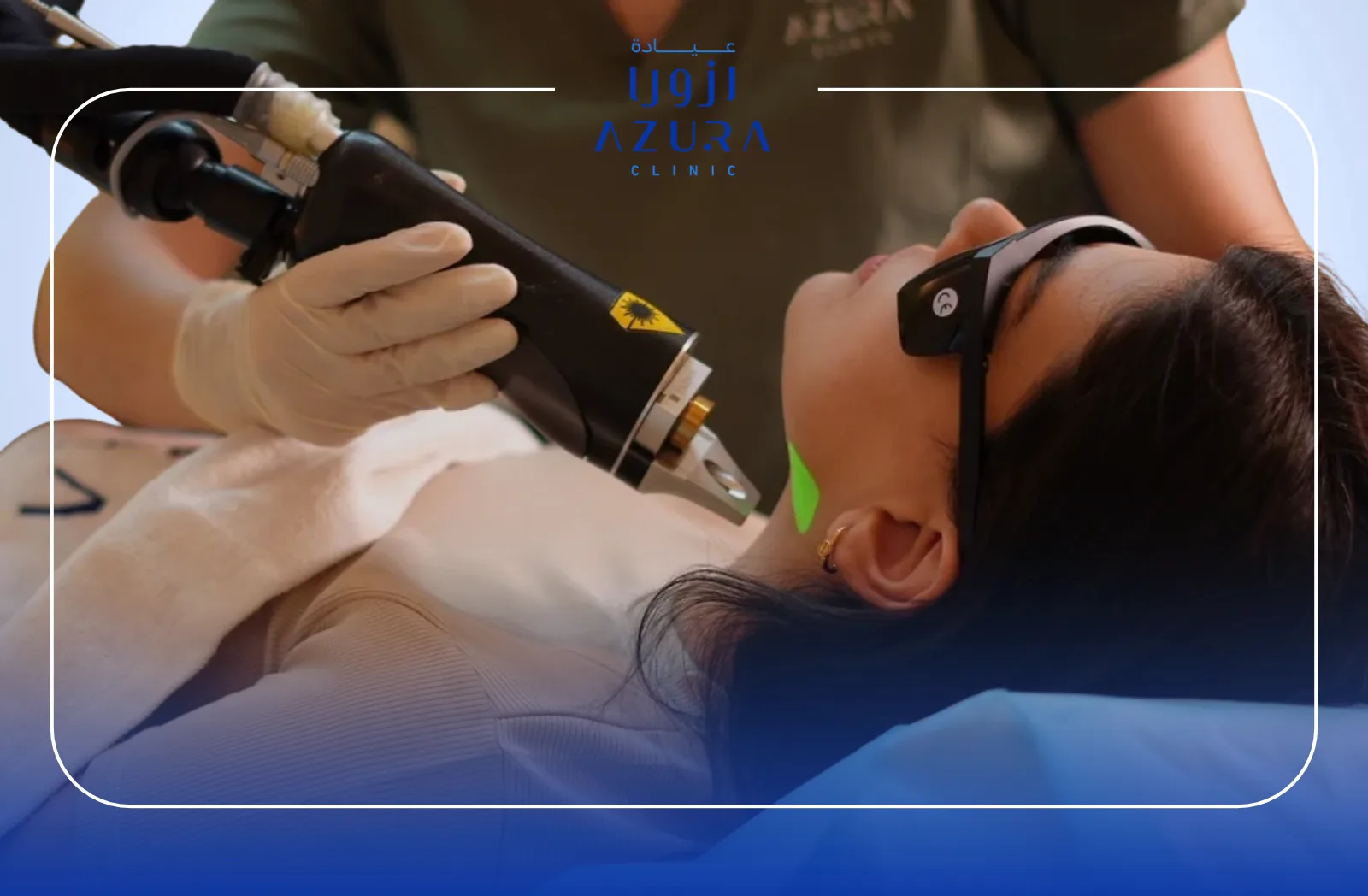
Most people describe Fotona as warm. The inside-the-mouth step of Fotona 4D feels like warm pulses on the gums and cheeks, and the PIANO® step feels like a hot stone moving slowly over the skin. Fotona 4D, SmoothEye and HAIRestart are usually done without anaesthetic, and VectorLift is done with local anaesthetic.
Downtime is short. Most treatments leave mild pinkness that settles quickly, and the SupErficial™ peel can cause light flaking for a short time. Fractional resurfacing for scars needs a little longer. Most patients can return to makeup soon after and wear a headscarf straight after treatment, as long as it is clean and soft against the skin.
How many Fotona sessions do you need, and how long do results last?
Fotona works by stimulating your own collagen, so a course of sessions gives better and longer-lasting results than a single visit. The number of sessions depends on your skin, the concern and the treatment, and your doctor sets the plan after examining you. Acne, scars, hair and nail treatments usually need a longer course, with progress reviewed along the way.
Results are long-lasting but not permanent, because skin keeps ageing and collagen keeps breaking down. Periodic maintenance sessions, daily sun protection and a good skincare routine help you keep the benefits for longer.
Who should not have Fotona laser, or should wait?
Fotona is suitable for most adults, but the doctor will postpone or change the plan if you:
Are pregnant or breastfeeding: elective laser treatments are usually delayed.
Have taken isotretinoin (Roaccutane) recently: tell the doctor, as the timing of resurfacing steps needs to be discussed.
Have an active cold sore or skin infection in the area, or a history of cold sores around the mouth, as preventive medication may be needed before treatment inside the mouth.
Have a fresh tan or sunburn, or take medicines that make your skin sensitive to light.
Have recent fillers or threads, or a tendency to keloid scars. Mention these so the doctor can plan safely.
Never stop a prescribed medicine, including blood thinners, before treatment without speaking to the doctor who prescribed it.
Why choose Azura Clinic for Fotona laser in Muscat?
Fotona is a medical platform with a wide range of settings, so the result depends heavily on who plans and performs the treatment. At Azura Clinic, every Fotona treatment is led by specialist dermatologists. Dr. Mona Negm and Dr. Mehri Maghsoodi have completed specialised Fotona training in the platform’s aesthetic and dermatological protocols, and they combine it with clinical experience in treating Omani skin. This means each step, from intraoral tightening to deep heating and resurfacing, is chosen through a medical assessment of your skin type, concern and history.
Specialist dermatologists: diagnosis, treatment planning and follow-up are handled by doctors who specialise in skin.
Central location in Sarooj: easy to reach from Qurum, Al Khuwair, Madinat Sultan Qaboos, Bausher, Al Mouj and Seeb, and open daily from 9am to 9pm.
Licensed by Oman’s Ministry of Health (No. 5087).
Questions patients ask about Fotona laser in Muscat
What are the main benefits of Fotona laser?
The main benefits of Fotona laser are non-surgical tightening and resurfacing in one platform, minimal downtime, natural-looking results built on your own collagen, and settings that can be adapted safely for medium and deep skin tones.
Where can I get Fotona 4D in Muscat?
Azura Clinic in Sarooj offers Fotona 4D and the full range of Fotona SP Dynamis treatments, planned and supervised by specialist dermatologists.
How much does Fotona laser cost in Muscat?
The cost depends on the treatment, the area and the number of sessions in your plan. Your doctor will explain the options and give you a clear quote after your consultation at Azura Clinic.
Is Fotona 4D better than HIFU?
They work differently. HIFU focuses ultrasound energy at fixed depths under the skin, while Fotona 4D combines intraoral collagen tightening, deep laser heating and surface resurfacing in one session. Fotona 4D also improves texture and glow, which HIFU does not target. The right choice depends on your skin laxity and goals.
Fotona or RF microneedling: which is better for acne scars?
Both are good options. RF microneedling, such as our Vivace RF microneedling device, delivers energy through fine needles and suits deeper scars. Fotona fractional resurfacing is needle-free and improves texture and pores. For many patients, the doctor combines the two over a course.
Can I have Fotona in summer in Oman?
Yes, many Fotona treatments can be done in summer because the pigmentation risk is lower than with many other lasers. Daily tinted sunscreen and avoiding direct sun after treatment are essential.
How long do Fotona 4D results last?
Results develop gradually and are long-lasting, though how long they last depends on age, skin quality, sun exposure and lifestyle. Maintenance sessions help keep the skin firm over time.
At what age can I start Fotona?
There is no fixed age. Younger patients often use Fotona to maintain collagen and improve texture, while older patients use it more for tightening and lifting.
Can I combine Fotona with Botox or fillers?
Yes, many patients do. Botox relaxes expression lines and fillers restore volume, while Fotona improves skin quality and firmness. The order and timing matter, so the doctor will plan them together.
Can men have Fotona treatments?
Yes. Fotona 4D Men is adapted for thicker, oilier skin, and HAIRestart is popular with men noticing early thinning.
Book your Fotona laser consultation in Muscat
The right Fotona plan starts with a proper skin assessment. At your consultation, one of our dermatologists will examine your skin, check whether Fotona is the best option for you, explain which Fotona benefits you can realistically expect, and go through the sessions, downtime and aftercare before anything is booked.
Azura Clinic is a specialist dermatology clinic in Sarooj, Muscat, licensed by Oman’s Ministry of Health (No. 5087). Meet our dermatology team.