This article was written by Matin Mirshafiei and approved by Dr. Mona Negm.
No two areas of the body respond to laser in quite the same way. Hair on the upper lip grows on a different cycle from hair on the back, underarm skin is thinner than skin on the legs, and in Muscat’s sun, exposed areas need more care than covered ones. A well-planned course of laser hair removal takes all of this into account.
At Azura Clinic, every plan begins with an assessment of your skin tone, your hair and the areas you would like to treat. This guide explains what changes from one area to the next, so you arrive at your consultation knowing what to ask.
Why the area makes a difference
Growth cycles. A laser can only disable a follicle while the hair is in its active growth phase. The share of hairs in that phase, and the length of the cycle, differ between the face and the body. This is why the number of sessions and the time between them vary by area.
Density and thickness. Coarse, dense hair on the back, chest or beard line absorbs laser energy well, but there is simply more of it to treat. Fine hair responds more slowly.
Skin sensitivity. Thinner skin, such as the upper lip, underarms and bikini line, feels the sensation more, so settings and pace are adjusted with care.
Sun exposure. The face, neck and arms see far more sun in Oman than covered areas. Treated skin should not be freshly tanned, and it needs protection between sessions.
The technology: Splendor X and skin tones in Oman
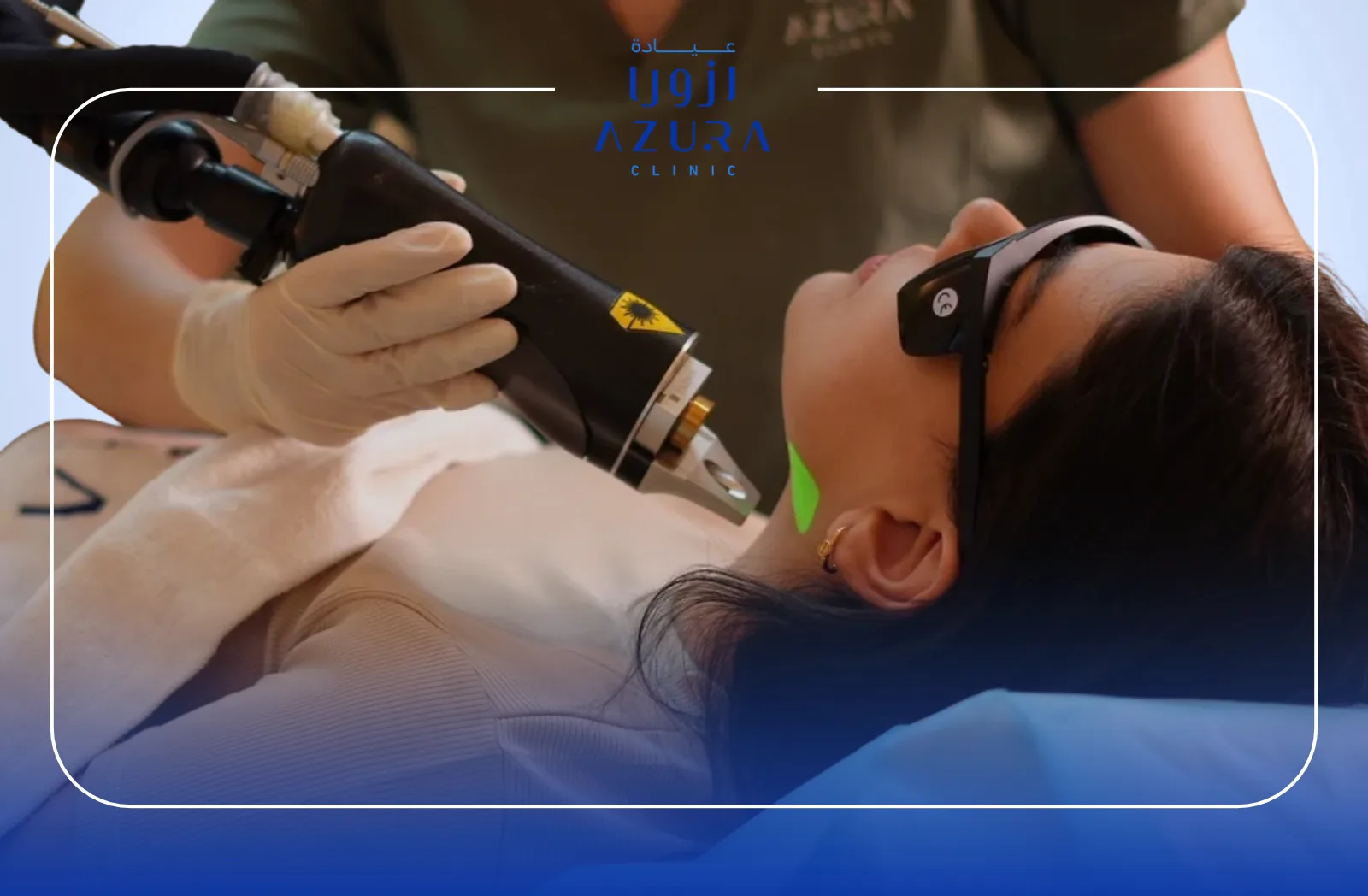
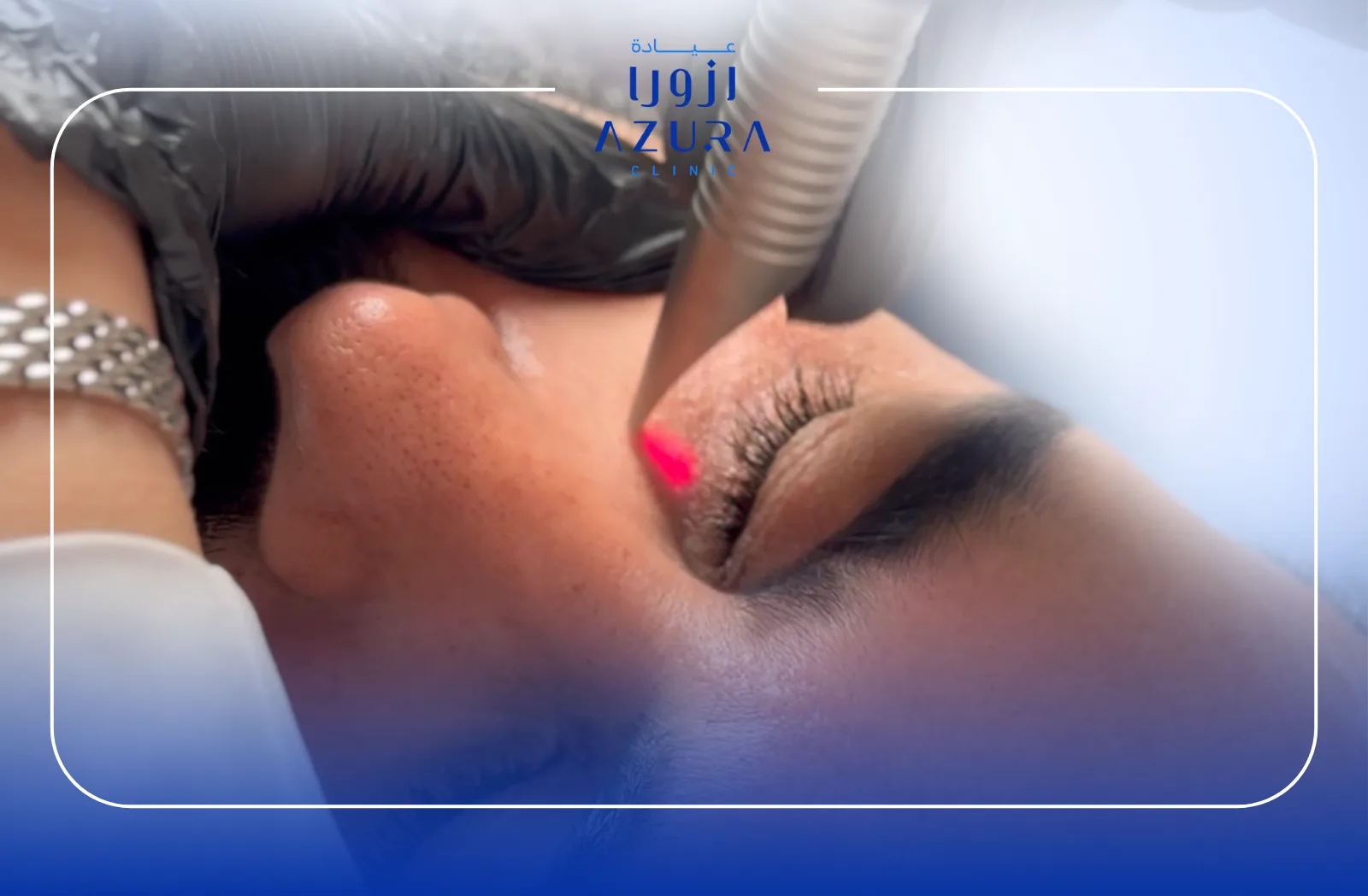
At Azura Clinic we use Splendor X, which combines two wavelengths in one system. Alexandrite is well suited to lighter skin and finer hair; Nd:YAG reaches deeper and is the safer choice for medium to deep skin tones and thicker hair. Being able to blend the two means settings can be matched to your skin rather than the other way round.
The system has built-in cooling for comfort, and its square treatment beam is designed to cover large areas evenly. For darker skin, the deciding factor is correct calibration by an experienced practitioner, which is why a skin assessment, and a patch test where appropriate, comes before your first session.
Area by area
Face: upper lip, chin, jawline and neck
For women, facial hair is often fine and can be influenced by hormones. If hair appears suddenly, grows noticeably thicker, or comes with irregular cycles, your dermatologist may first look at hormonal causes such as polycystic ovary syndrome. Hormonal hair does respond to laser, but it usually needs more sessions and occasional maintenance.
For men, the face is about definition and comfort: shaping the cheek line and neck, and relieving razor bumps and ingrown hairs, known medically as pseudofolliculitis barbae. Reducing hair at the follicle removes the cause of that irritation rather than managing it after every shave.
Underarms
The underarms are among the most requested areas. The hair is usually coarse and responds well, and each session is quick. Two questions come up often:
Will it reduce sweating? No. Laser targets hair follicles, not sweat glands. If excessive sweating is the concern, it has its own treatment: Botox for underarm sweating.
Will it lighten dark underarms? Repeated shaving and ingrown hairs can irritate the skin and make it look darker, so needing to shave less often can help the area look calmer. Established pigmentation is a separate concern with dedicated options, such as Fotona underarm whitening.
Bikini area
The skin here is thin and sensitive, so the settings are chosen conservatively and adjusted as your skin responds. Treatment is one-to-one and discreet, and exactly which zones you would like included is discussed privately at your consultation. Many women plan the bikini area together with the underarms so both progress on the same schedule.
Back, chest and shoulders
These are the most common body areas for men. The hair is dense and coarse, and the areas are large, so an efficient system and a consistent schedule matter. Dense areas tend to sit at the higher end of the usual session range, and hair on the shoulders and upper back can be hormonally influenced, which may mean the occasional maintenance session later on.
Arms and legs
Larger areas, often exposed to the sun. Hair on the forearms can be finer and lighter, and may respond more gradually than hair on the lower legs. Sun protection between sessions is especially important here.
Full body
A full-body plan brings several areas into one structured schedule, which is often the most time-efficient way to treat. What “full body” includes varies from clinic to clinic, so confirm precisely which areas are part of your plan before you begin. Sessions are longer, and it helps to plan them around travel and time in the sun.
How many sessions, and how far apart?
Because follicles are only treatable during active growth, laser hair removal is always a course rather than a single visit. The number of sessions differs from one person to the next, and dense areas such as the back or chest usually need more than fine ones. Facial areas are usually scheduled closer together than body areas; your specialist sets the exact interval for each zone.
Area
What usually shapes the plan
Face and neck
Shorter intervals; hormones can influence regrowth; sun exposure
Underarms
Coarse hair responds well; quick sessions
Bikini area
Sensitive skin; conservative settings
Back, chest, shoulders
Dense hair; often more sessions; possible maintenance
Arms and legs
Large areas; finer hair on the arms; sun protection
Full body
Longer sessions; one coordinated schedule
After each session, treated hairs shed gradually over the following weeks. That is the treatment working, not a sign that it has failed. Most people notice a clear reduction after the first few sessions, with any returning hair finer and lighter than before.
Preparing for your session
Shave the area the day before, so the hair is short but the follicle is still in place.
Avoid waxing, threading and plucking for about four weeks before treatment and throughout your course; they remove the root the laser needs to reach.
Keep treated areas out of strong sun and avoid self-tanning products for around two weeks beforehand.
Pause retinol and exfoliating acids on the area in the days before, as your specialist advises.
Tell us about any medication, particularly isotretinoin for acne, and about pregnancy.
Aftercare in Muscat’s climate
For 48 hours, avoid saunas, steam rooms, hot showers, swimming pools and intense workouts.
Apply a broad-spectrum SPF every day to any treated area that sees the sun.
Use gentle, fragrance-free products on the treated skin.
For best results, shave only on the day of your laser session or one day before. If needed between sessions, wait at least 14 days before shaving again.
Mild redness or warmth for a few hours is normal and settles on its own.
when to wait
Treatment may be postponed or adjusted if you are pregnant, have an active skin infection or cold sore in the area, have a recent tan, or take medication that makes the skin more sensitive to light. Very light, grey or white hair contains little pigment and responds poorly to laser. Your full medical history is reviewed before anything begins.
Questions patients ask
Is laser hair removal permanent?
Please note that maintenance sessions may be required after completing your initial laser hair removal sessions. The frequency of maintenance sessions varies from person to person depending on factors such as hair growth cycle, treatment area, hormonal changes, and individual response to laser treatment.
Does it feel different on different areas?
Yes. Most people describe a warm snap, like a light elastic flick. The upper lip, underarms and bikini line tend to feel more intense than the legs or back. Built-in cooling keeps the experience comfortable throughout.
Can I continue treatment in summer?
Yes, provided the treated skin is not freshly tanned and you protect it from the sun between sessions. If you are planning a beach holiday, let us know so your schedule can be arranged around it.
Is it safe for darker skin?
With the Nd:YAG wavelength and correct settings, laser hair removal can be used safely across a broad range of skin tones, including the medium to deep tones common in Oman. Risk comes from the wrong technology or settings, which is why assessment comes first.
A good result starts with a good plan: the right wavelength for your skin, a schedule that fits each area, and a team that adjusts as your skin responds. Our laser hair removal service in Sarooj, Muscat, is led by specialist dermatologists, including Dr. Mona Negm, whose training includes the medical application of lasers.