

Tattoo Removal
Remove unwanted tattoos safely with Q-Switched Nd:YAG laser in Muscat. This advanced technology breaks down tattoo ink effectively with minimal downtime and visible results.
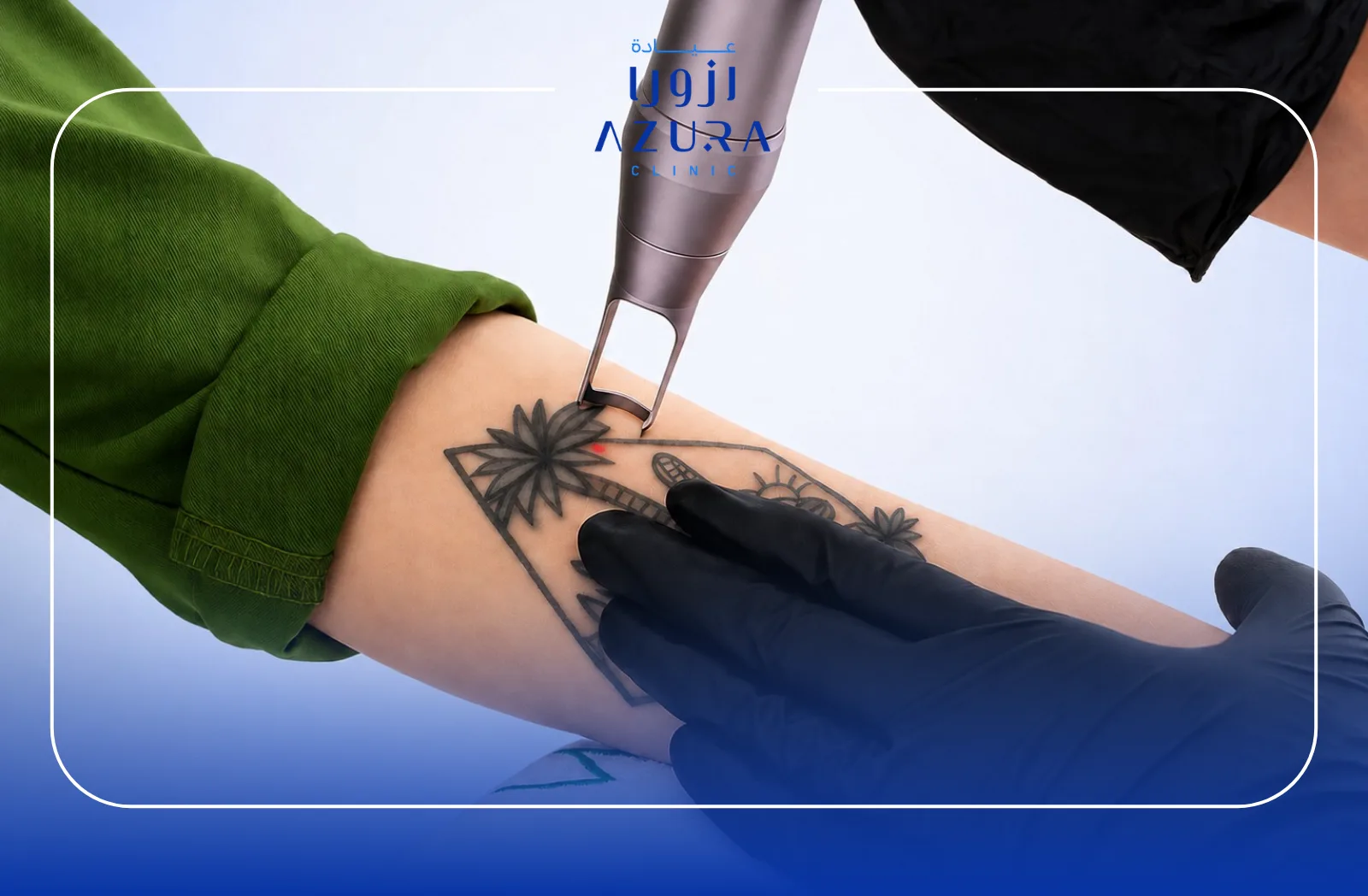
Laser Tattoo Removal in Muscat
Removing a tattoo is not one appointment. The laser breaks the ink into particles small enough for your body to carry away, and most of that clearing happens in the weeks between sessions rather than on the day itself. At Azura Clinic in Sarooj, Muscat the tattoo is examined first (which colours, how deep, how old, and what your skin will tolerate) before anyone quotes you a number of sessions. Tattoo Removal with Q-Switched Laser ranges from 20 OMR to 345 OMR depending on the size of the tattoo and the plan agreed with you.
What Decides How Many Sessions You Need
- Colour: black and dark blue absorb the laser best and clear first. Yellow, white and light pink are the stubborn ones and may not clear completely.
- Professional or amateur: professional ink sits deeper and more evenly, so it usually takes more sessions than a homemade tattoo.
- Age: an old, faded tattoo has already lost ink and tends to need fewer sessions than a fresh one.
- Where it is: ink on the ankle, foot or wrist clears more slowly than ink on the chest or back, because circulation is what carries the fragments away.
- You: how fast your own body clears the broken-down ink varies from person to person, and smoking is known to slow it.
Sessions are spaced out to give your body time to clear the last round, and coming back sooner does not speed anything up. How many sessions your tattoo needs, and how far apart they sit, is decided at the consultation.
Eyebrow, Eyeliner and Lip Tattoos
Microblading, permanent eyebrows, eyeliner and lip blush are removed with the same laser but treated as a different problem. Cosmetic pigments often contain iron oxide or titanium dioxide, and these can turn darker or grey on the first pass instead of fading; a known reaction that then clears over the following sessions. That is why a small test spot is done first and checked before the rest of the area is treated. If you plan to have the area tattooed again afterwards, say so at the consultation, because it changes the plan.
Tattoo Removal on Darker Skin
Most skin here sits in the medium-to-deep range, where the pigment in your skin competes with the ink for the laser's energy. That is why the 1064 nm wavelength does most of the work: it passes surface pigment more safely than the shorter 532 nm one, which is kept for red and orange ink and used more cautiously. Settings start conservative, sessions may be spaced further apart, and the aim is to avoid trading a tattoo for a pale or dark patch. Staying out of the sun between sessions matters for exactly the same reason.
The Session, and the Days After
Numbing cream goes on first. The pulses feel like a rubber band snapping against the skin, and the session itself is short. The treated area turns white immediately afterwards (that is expected) then looks red and slightly swollen for a while. Some people blister, which is part of the process rather than a complication as long as it is left alone. Keep the area clean and covered, do not pick at it, and keep it out of the sun until it has healed. Most people go back to work the same day.
What the Result Actually Looks Like
Complete removal is realistic for many tattoos and not guaranteed for every one. A faint shadow, or a slight difference in skin texture, can remain where a dense, heavily worked tattoo used to be, and the pale ink colours are the most likely to leave something behind. You will be told which of these yours is at the consultation rather than several sessions in. Our guide to Q-switched laser tattoo removal walks through the fading process session by session.
The Same Laser, Other Uses
The Q-switched laser used for tattoos is the same device behind our treatments for dark lips, facial pigmentation and hair bleaching: different wavelengths and settings, the same principle of targeting pigment and leaving the skin around it alone.
Book a Tattoo Removal Consultation in Muscat
Azura Clinic is in Sarooj, Muscat, licensed by Oman's Ministry of Health (No. 5087). Our dermatology team is made up of three specialist dermatologists, all women. You can see them on our team page. Ask for a specific doctor when you book and we will arrange the appointment with her.