This article was written by Matin Mirshafiei and approved by Dr. Mona Negm.
By the end of summer in Muscat, many people notice the same thing in the mirror: patches on the cheeks look deeper, old acne marks have not faded, the upper lip looks shadowed, and skin that was even in March now looks uneven. Months of strong sun, heat and humidity leave their mark, and summer pigmentation is especially common on the medium to deep skin tones of Oman.
The good news is that most summer darkening can be improved, and the cooler months are the most practical time to start. This guide explains why skin darkens over the summer, how to tell which type of pigmentation you have, and why October is a sensible moment to begin pigmentation treatment in Muscat.
Why skin gets darker in an Omani summer
Pigment cells, called melanocytes, react to anything that stresses the skin. In an Omani summer, several triggers act on them at once.
Ultraviolet light. UV is the best-known trigger. It reaches the skin on cloudy days, in the shade and through side car windows.
Visible light. Ordinary daylight also stimulates pigment, and its effect is stronger and longer-lasting in darker skin. This is one reason a standard untinted sunscreen does not fully protect skin prone to melasma.
Heat. High temperatures activate pigment cells even without direct sun. A hot car, a kitchen or a long day outdoors in 45°C can darken melasma that was under control.
Sweat and friction. Humidity, sweat trapped under a headscarf or mask, and rubbing from clothing irritate the skin, and irritated skin responds by making more pigment.
Summer habits. Waxing and threading the face more often, travel to the beach, and scrubbing harder to “clean” oily skin all add irritation at the same time.
Which type of summer pigmentation do you have?
Not all dark patches are the same, and the treatment depends on the type. A dermatologist confirms this at the consultation, but these patterns will help you describe what you see.
Melasma
Melasma appears as symmetrical brown or greyish-brown patches on the cheeks, forehead, upper lip or jawline. The two sides of the face roughly mirror each other, and the edges blend softly into the surrounding skin. It is linked to hormones, pregnancy and genetics, and it is very sensitive to sun and heat. Melasma often gets worse in summer and lighter in winter, as Cleveland Clinic explains. It can be controlled and lightened, but it cannot be cured permanently.
Sun spots
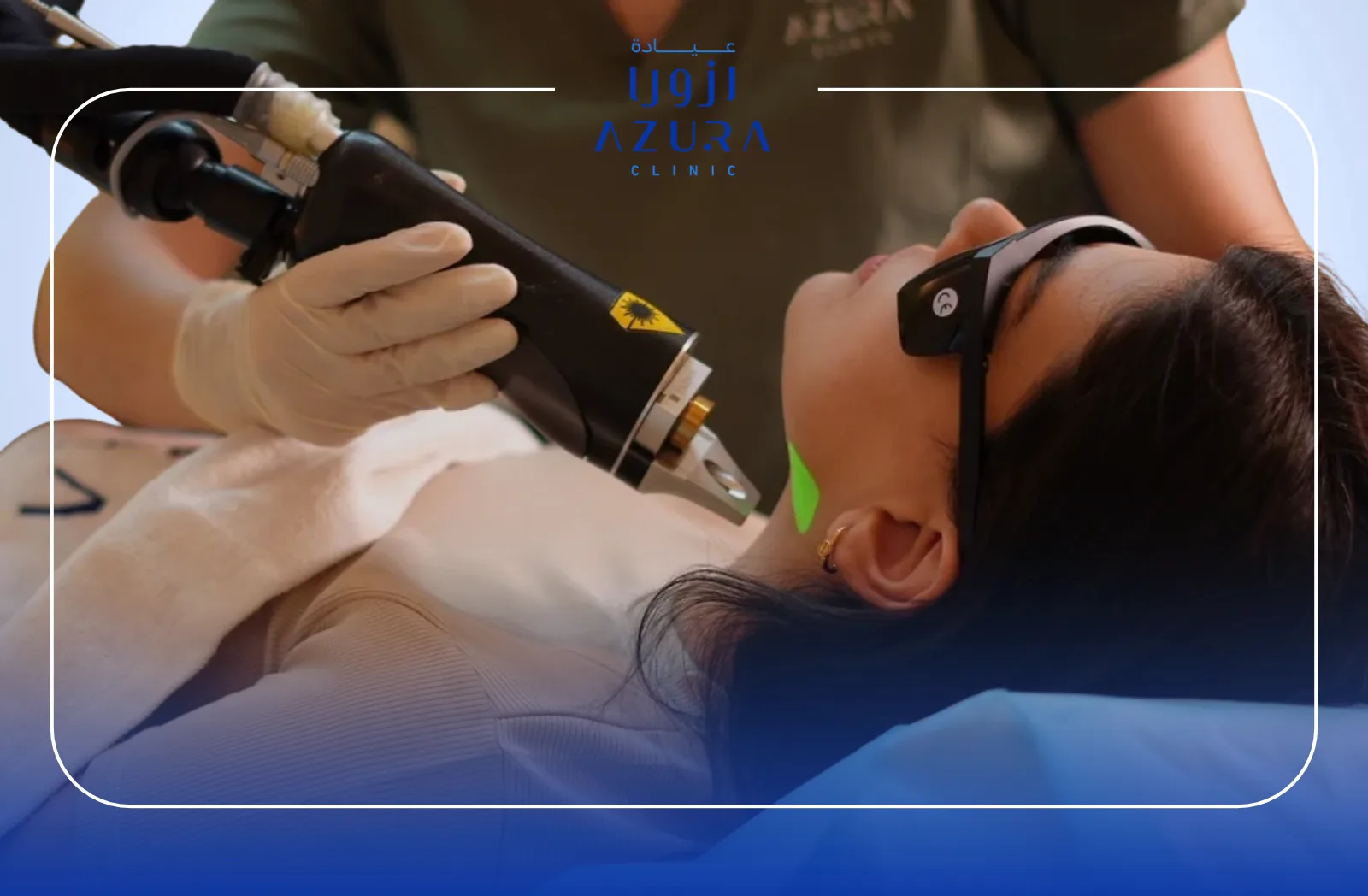
Sun spots are separate, sharply defined brown spots on areas that see the most sun: the top of the cheeks, the nose, the backs of the hands and the forearms. They build up over years of exposure and usually respond well to targeted laser, such as face glowing with Q-Switched laser.
Marks left after acne or irritation
Post-inflammatory hyperpigmentation sits exactly where a spot, rash or irritation used to be. It is flat and brown, and in darker skin it can last for months, especially when summer sun keeps it active. If you are still breaking out, treating the acne comes first. Pink or red marks are different: they come from small blood vessels, not pigment, and need a different approach.
Darkening in folds and friction areas
Underarms, inner thighs, the neck and the upper lip often darken more over the summer because of sweat, shaving and rubbing. These areas respond best when the cause is treated as well as the colour.
Type
What it looks like
Main summer trigger
Melasma
Symmetrical patches with soft edges
Sun, visible light and heat
Sun spots
Separate spots with sharp edges
Years of UV exposure
Post-acne marks
Flat brown marks where spots were
Sun keeps old marks dark
Friction darkening
Darker underarms, neck, inner thighs
Sweat, shaving and rubbing
One important exception: a single dark spot that is new, growing, changing shape, uneven in colour, itchy or bleeding is not a summer pigmentation problem. It should be examined by a dermatologist before any cosmetic treatment.
Will summer pigmentation fade on its own?
Some of it will, slowly. A light tan fades within weeks, and mild marks from irritation can lighten over a few months once the trigger stops. Melasma and established sun spots usually do not clear by themselves. In many cases they lighten a little in winter and return darker the next summer, so the pattern repeats year after year without treatment.
Why October is the best time to start treatment
Muscat is still warm in October, so sun protection remains essential. But the months from October to March give summer pigmentation treatment its best chance of working.
Less heat and UV. Lower temperatures and shorter, milder days mean fewer triggers working against the treatment while your skin recovers.
Easier aftercare. Peels and lasers leave the skin more sensitive for a short time. It is much easier to stay out of the sun and heat in winter than in July.
Time to build results before next summer. Pigmentation fades gradually over a course of sessions. Starting now gives you several months of progress before the next hot season.
Safer for darker skin. Skin that is not freshly tanned can be treated with more predictable settings, which lowers the risk of new dark marks after treatment.
A good time for laser hair removal too. If shaving and waxing are darkening your underarms or upper lip, the cooler months are also ideal for starting laser hair removal, which removes one of the main causes of friction darkening.
“Every year after the summer we see patients whose melasma and dark spots have deepened. Starting treatment in the cooler months, and using a tinted sunscreen every day, gives the skin time to respond before the heat comes back.” Dr. Mona Negm, Specialist Dermatologist, Azura Clinic
Pigmentation treatment in Muscat at Azura Clinic
Your dermatologist chooses the treatment according to the type of pigment, how deep it sits and how your skin has reacted before. A plan usually combines clinic sessions with a simple home routine. Melasma is managed with extra care, because aggressive treatment can irritate the skin and make it darker.
Many people try to fix summer pigmentation at home and make it worse. Avoid these habits before your consultation:
Lightening creams bought without a prescription. Some contain strong steroids, unlisted hydroquinone or even mercury, which can thin the skin and cause pigmentation that is harder to treat.
Lemon juice, toothpaste or undiluted acids on dark spots.
Grainy scrubs, loofahs and daily strong exfoliation.
Frequent waxing or threading on the upper lip.
If you have been using a cream, bring it with you. Your dermatologist needs to know what is already on your skin before choosing a treatment.
Daily protection that keeps the results
Sun protection is what stops summer pigmentation from returning once it has been treated.
Apply a broad-spectrum SPF 50 every morning, all year round, and reapply when you are outdoors.
Choose a tinted sunscreen containing iron oxides. It protects against visible light as well as UV, which matters for melasma.
Use shade, a wide-brimmed hat and sunglasses during the middle of the day.
Limit time in strong heat, including saunas, steam rooms and very hot showers.
Keep your skincare routine short and gentle.
Questions patients ask
Can I start pigmentation treatment if I still have a tan?
Usually it is better to wait until the tan has faded. Treating freshly tanned skin increases the risk of irritation and new dark marks. Your dermatologist will check your skin and decide when to begin.
How many sessions will I need?
It depends on the type and depth of pigment. Sun spots often improve in a few sessions, while melasma needs a longer course and ongoing maintenance. You will receive a realistic estimate after your skin is examined.
Is laser safe for pigmentation on darker skin?
Yes, when the right device and settings are chosen by a dermatologist. Incorrect settings can worsen pigmentation, which is why treatment for medium to deep skin tones is always medically supervised.
Will my pigmentation come back next summer?
Sun spots and acne marks usually stay improved with good sun protection. Melasma can return with sun, heat or hormonal changes, so daily protection and occasional maintenance sessions keep the result.
Can I treat melasma during pregnancy?
Strong treatments are avoided during pregnancy and breastfeeding. Sun protection and gentle, pregnancy-safe skincare are recommended, and pregnancy-related melasma often fades after delivery.
Book your pigmentation consultation in Muscat
Azura Clinic is in Sarooj, Muscat, and is licensed by Oman’s Ministry of Health (No. 5087). Pigmentation is assessed by our specialist dermatologists, including Dr. Mona Negm. Come without makeup if you can, note when the patches first appeared, and bring the products you are currently using.