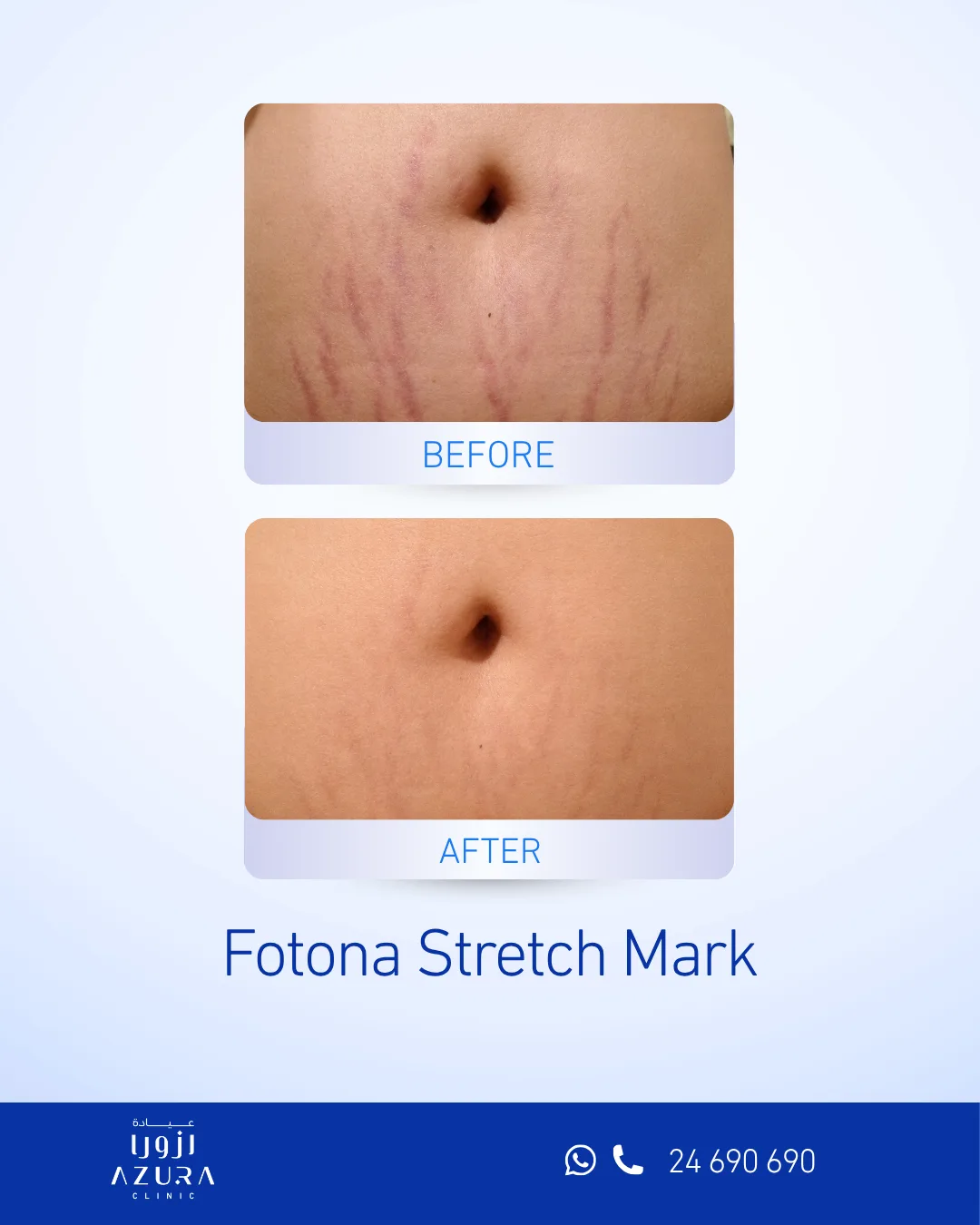
Fotona Stretch Mark

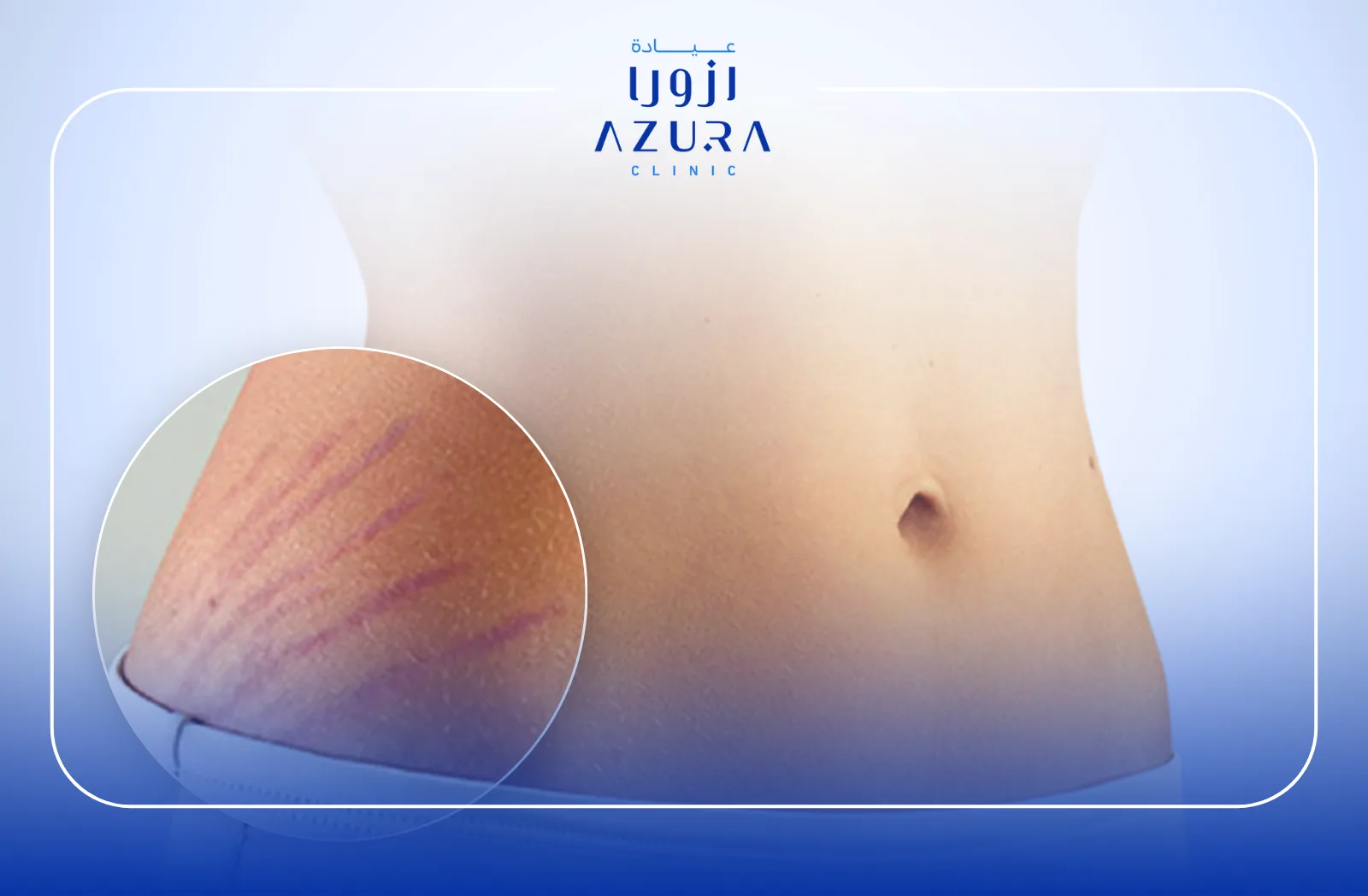
Fotona laser stretch mark removal treatment at Azura Clinic Muscat Oman
Published at 29 September 2025
Views 386
Author Matin Mirshafiei
Last Update July 16, 2026

What Is Fotona Stretch Mark Removal?

Stretch marks are a completely normal skin concern — but if they affect your confidence, you deserve effective options. Fotona stretch mark removal in Muscat at Azura Clinic is a non-invasive laser treatment designed to visibly reduce stretch marks and improve skin texture without surgery or downtime.

We use the Fotona SP Dynamis, a world-class laser platform trusted by dermatologists across the globe. It’s clinically proven, FDA-approved, and safe for all skin types — including the warmer skin tones common across Oman.

How Does It Work?

Fotona uses a dual-wavelength approach, meaning it targets stretch marks at two different depths in a single treatment. This combination makes it one of the most thorough laser stretch mark treatments available today.

  • Er:YAG (Ablative Fractional Laser): This gently removes the outermost layers of skin, triggering your body’s natural healing process and smoothing uneven texture.
  • Nd:YAG (Non-Ablative Laser): This delivers controlled heat to the deeper layers, stimulating collagen remodeling — the process by which your skin rebuilds its internal support structure.

Together, these two phases tighten, smooth, and rejuvenate the treated area. Over a series of sessions, the stretch marks become noticeably less visible as new collagen fills in the affected tissue. Research published on PubMed supports the use of fractional laser technology for improving stretch mark appearance.

Common Treatment Areas

  • Abdomen
  • Thighs and hips
  • Buttocks
  • Breasts
  • Arms

Who Is a Good Candidate?

If you have stretch marks caused by pregnancy, rapid weight changes, or growth spurts, you are likely a strong candidate for this treatment. Fotona works on both newer marks (which appear red or purple) and older marks (which appear white or silver) — though earlier treatment often yields faster results.

It is suitable for all skin types and tones, making it an excellent option for patients across Oman. If you have active skin infections, a history of keloid scarring, or are currently pregnant or breastfeeding, please let our team know during your consultation so we can plan your care accordingly.

Not sure if this is right for you? Our expert doctors at Azura Clinic will assess your skin thoroughly before recommending any treatment.

What Results Can You Expect?

Most patients notice a gradual improvement in skin texture and tone after each session. Stretch marks become softer, smoother, and far less noticeable as collagen continues to regenerate in the weeks following treatment.

Results are long-lasting, particularly when you maintain a stable weight, stay hydrated, and protect your skin from sun exposure. A personalised treatment plan — typically a series of sessions — gives you the best possible outcome. Our team at Azura Clinic will guide you through every step.

Why Azura Clinic in Muscat?

Azura Clinic is Muscat’s leading dermatology and aesthetics clinic, recognised with the Best Brand CX Award, Oman 2025. We combine advanced technology with genuine patient care — every consultation is thorough, every treatment plan is tailored to you.

Our team of qualified dermatologists and aesthetic practitioners brings international expertise to every session. You can learn more about the people behind your care on our Our Doctors page.

Aftercare Tips

Good aftercare is what makes the difference between average and excellent results. Follow these simple guidelines after your laser stretch mark removal session:

  • Apply SPF 50+ sunscreen daily on all treated areas — sun exposure can darken the skin and slow healing.
  • Keep the area moisturised with a gentle, fragrance-free moisturiser.
  • Avoid makeup, perfumed products, and active skincare ingredients on the treated skin for at least 24–48 hours.
  • Skip hot baths, saunas, and vigorous exercise for 48 hours post-treatment.
  • Do not exfoliate or scrub the area for 5–7 days.
  • Resist the urge to pick or scratch any peeling skin — let it shed naturally.
  • Drink plenty of water and eat well to support your skin’s healing and collagen production.
  • Attend all your scheduled sessions to get the full benefit of your treatment plan.

Before treatment, avoid sun exposure and retinoid or acid-based skincare products for at least five days. Come to your session with clean, well-hydrated skin for the best response.


5/5 - (72 votes)


Before / After Treatment

Before Treatment Instructions
🔹 Avoid sun exposure for at least 2 weeks prior to treatment.
🔹 Discontinue use of retinoids, acids (AHA/BHA), and bleaching creams 5 days before the session.
🔹 Avoid tanning beds and self-tanners before treatment.
🔹 Stay hydrated — well-hydrated skin responds better to laser treatment.
🔹 Shave the treatment area (if necessary) the night before.
🔹 Let your practitioner know if:
🔹 You’re pregnant or breastfeeding.
🔹 You have any active skin infections or wounds.
🔹 You have a history of keloid scarring or pigmentation issues.
After Treatment Instructions
🔹 Avoid sun exposure and apply SPF 50+ daily on treated areas.
🔹 Do not apply makeup, perfumed products, or active skincare on the treated area for at least 24–48 hours.
🔹 Keep the area clean and moisturized using a gentle, fragrance-free moisturizer.
🔹 Avoid hot baths, saunas, and vigorous exercise for 48 hours post-treatment.
🔹 Avoid exfoliation or scrubbing for 5–7 days.
🔹 Do not pick or scratch any dry or peeling skin.
🔹 Stay hydrated and maintain a balanced diet to support healing and collagen production.
🔹 Follow your treatment plan and attend all scheduled sessions for best results.


Before and After Instructions (PDF) – Click to Download


FAQs
1
Fotona Stretch Mark treatment at Azura Clinic in Muscat usually ranges from OMR 70 to OMR 203, with the final cost varying by each patient’s skin condition, stretch mark severity, number of sessions, and doctor’s assessment.
2
Stretch marks form when the skin is stretched rapidly and the collagen fibres beneath it tear, leaving scar-like bands. The Er:YAG wavelength gently resurfaces the outer skin layer, while the Nd:YAG wavelength penetrates deeper to heat the tissue and stimulate the body's natural collagen production. Over the following weeks your skin remodels from within, gradually smoothing the texture and fading the discolouration.
3
Most patients at Azura Clinic describe the sensation as a warm snapping feeling on the skin — uncomfortable rather than painful. A topical numbing cream is applied before your session to keep you as comfortable as possible. Sensitivity varies depending on the treatment area and your personal pain threshold, and our team adjusts settings to suit you throughout the procedure.
4
Most patients in Muscat see meaningful improvement after a course of three to six sessions, spaced several weeks apart to allow the skin time to heal and rebuild collagen between visits. The exact number depends on how deep, wide, and mature your stretch marks are. At Azura Clinic, your practitioner will assess your skin at the first consultation and give you a realistic treatment plan tailored to your marks.
5
Fotona can treat both. New stretch marks — which appear red, pink, or purple — tend to respond faster because there is still active inflammation and more collagen activity in the area. Older white or silver stretch marks can also be significantly improved, though they usually require more sessions as the tissue has fully matured. At Azura Clinic we set honest expectations at your consultation so you know what to expect for your specific marks.
6
Fotona is suitable for most adults who want to reduce stretch marks on the abdomen, thighs, hips, buttocks, upper arms, or breasts. It works well across all skin tones, which is particularly important in Oman where darker skin types require careful laser selection to avoid pigmentation changes. You may not be suitable if you are currently pregnant, breastfeeding, or have certain skin conditions in the treatment area — your practitioner at Azura Clinic will confirm this at your consultation.
7
Yes — this is one of the reasons Fotona is a preferred choice at Azura Clinic in Muscat. The Nd:YAG wavelength has a strong safety record on medium to dark skin tones because it bypasses the melanin in the upper skin layers and targets deeper tissue. When performed by trained professionals using the correct settings, the risk of post-inflammatory hyperpigmentation — darkening of the skin — is very low.
8
In the days before your appointment, avoid prolonged sun exposure and self-tanning products on the treatment area, as tanned skin increases the risk of side effects. Keep the skin well moisturised and stay hydrated. Arrive with clean skin — no lotions, oils, or perfume applied to the area. Your Azura Clinic practitioner will give you a full pre-care checklist at your consultation.
9
Downtime is minimal, which makes Fotona popular with busy patients in Muscat. You may notice mild redness, slight swelling, or a warm sunburn sensation in the treated area for 24 to 48 hours. Most people return to work and daily activities the same day or the next day. You should avoid intense heat — such as saunas or hot baths — and direct sun exposure for a few days after each session.
10
Some patients notice a subtle improvement in skin texture after their first session, but the most visible changes build gradually over two to three months as your body produces new collagen. Because the improvement is driven by your skin's own healing process, results continue to develop between sessions and even after your final treatment. Patience is important — this is a progressive process, not an overnight fix.
11
The structural improvements made to your skin are long-lasting because the remodelled collagen does not simply disappear. However, your skin continues to age and new stretch marks can form if significant weight changes occur. Maintaining a stable weight, staying hydrated, and protecting your skin from sun damage all help preserve your results. Some patients in Oman choose an annual maintenance session to keep their skin looking its best.
12
Fotona stretch mark treatment is not recommended during pregnancy or while breastfeeding. It should also be avoided over areas with active skin infections, open wounds, or a history of keloid scarring. Certain medications that increase photosensitivity — making skin more reactive to light — may also mean you need to delay treatment. A thorough medical history review at your Azura Clinic consultation ensures the treatment is safe for you before we begin.
13
Yes, in some cases combining Fotona with complementary treatments such as radiofrequency skin tightening or advanced skincare protocols can enhance overall results, particularly when skin laxity is also a concern alongside the stretch marks. Your practitioner will discuss whether a combined approach makes sense for you after assessing your skin. Any combination plan is designed around your goals, not a generic package.
14
Azura Clinic uses authentic Fotona technology operated by trained medical professionals who understand the nuances of treating the diverse skin types seen across Oman. We take a personalised approach — no one-size-fits-all programmes — and we are transparent about what results are realistic for your specific marks. Our team combines clinical expertise with a welcoming environment so you feel informed and comfortable throughout your journey.
15
Fotona stretch mark removal is a medical-grade laser treatment that works from inside the skin, not just on the surface. Unlike creams or microneedling alone, Fotona uses two laser wavelengths — Er:YAG and Nd:YAG — to resurface damaged skin and trigger deep collagen and elastin rebuilding. This dual action addresses both the texture and the colour of stretch marks, producing results that topical products simply cannot match.


Similar Services
RF fractional treatment for stretch marks at Azura Clinic Muscat
RF Fractional for Stretch Marks
Comments

Leave a Reply

Your email address will not be published. Required fields are marked *