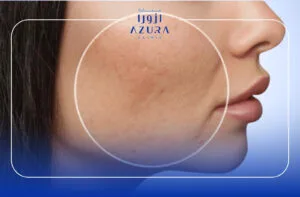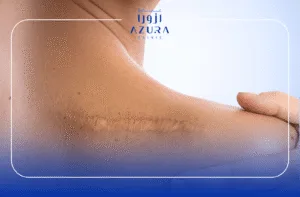
Subcision Before & After Photos
Gallery images related to this service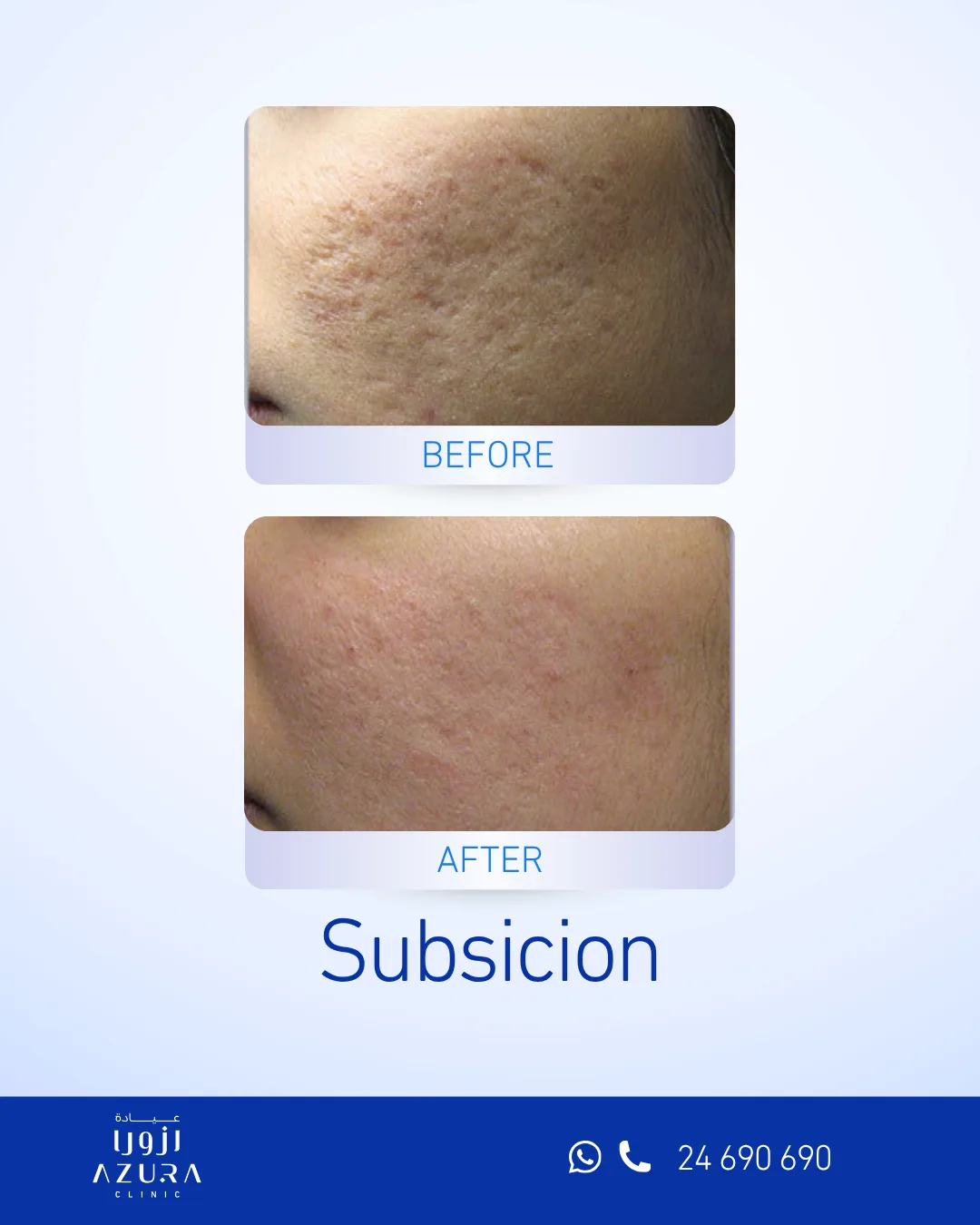

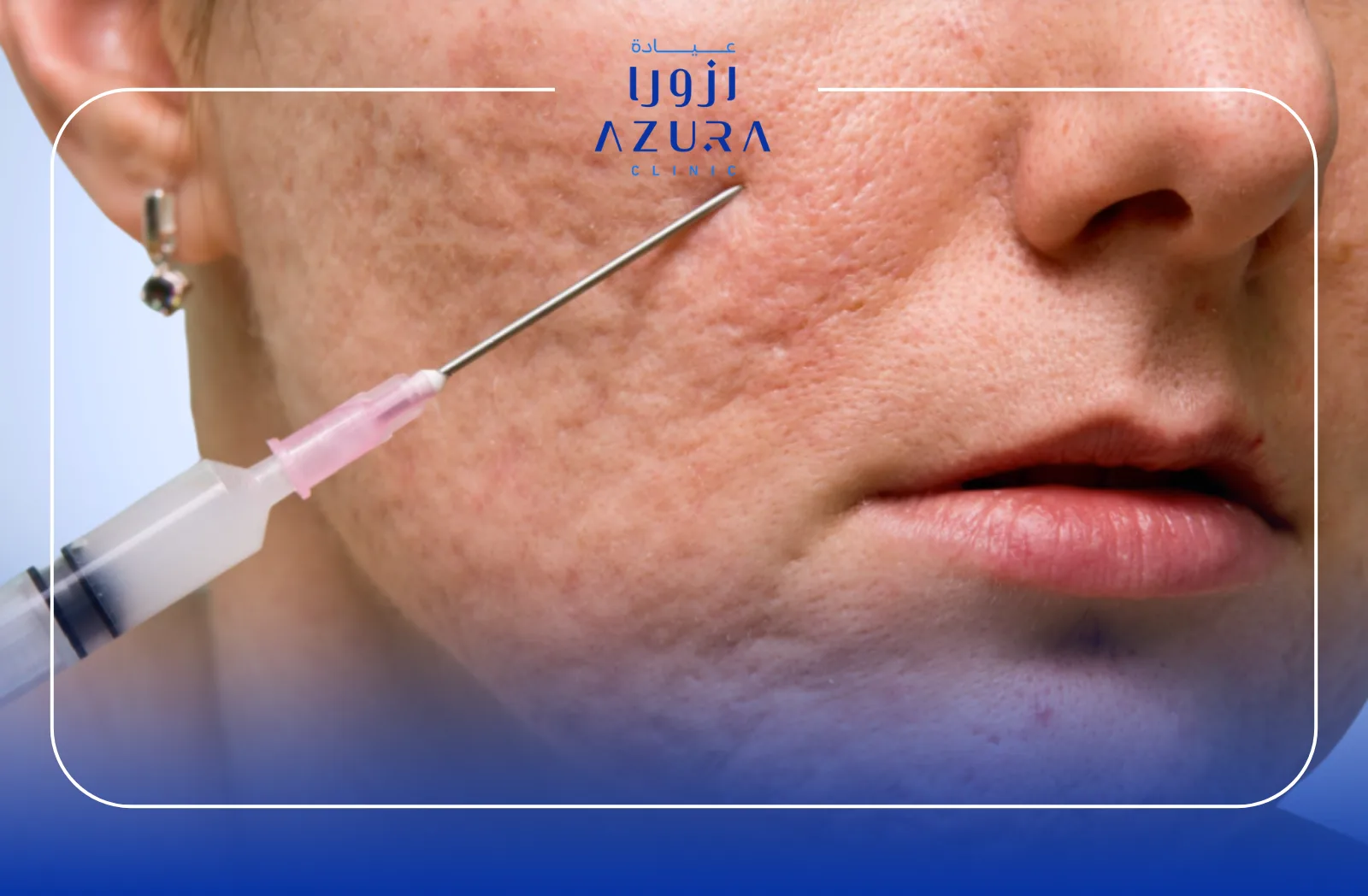
Subcision is a minimally invasive procedure designed to lift depressed acne scars from beneath the skin. If you have scars that appear sunken or tethered (like they’re being pulled downward) subcision may be exactly what you’ve been looking for.
At Azura Clinic in Muscat, we use a fine, sterile needle inserted just below the surface of the skin. The needle severs the fibrous bands of tissue that anchor the scar down, allowing the skin to rise back toward its natural level.
This technique is particularly effective for rolling scars (wide, wave-like depressions) and boxcar scars (broader, flat-bottomed indentations). It works with your body’s own healing process, not against it.
Under the surface of a depressed scar, fibrous strands of tissue pull the skin downward, creating that characteristic dimpled or sunken appearance. Subcision breaks those strands using a controlled, fan-like movement of the needle beneath the skin.
When those fibrous bands are released, the skin lifts naturally. The controlled micro-injury also causes a small blood clot to form under the scar. Over the following weeks, your body replaces that clot with fresh collagen; the protein that gives skin its firmness and smooth texture.
The result is a gradual, natural improvement in skin surface. According to research published on PubMed, subcision is a well-established technique for the treatment of distensible acne scars, with a strong safety profile when performed by a trained clinician.
You may be a strong candidate for subcision treatment in Muscat if you have rolling or boxcar acne scars that haven’t responded well to creams or surface-level treatments. The procedure works best when scars are caused by fibrous tethering beneath the skin, which is very common with post-acne scarring.
Good candidates are generally people who have:
During your consultation at Azura Clinic, our doctors will assess your scar types and skin condition to confirm whether subcision; alone or combined with treatments like scar reduction therapies: is the right approach for you.
Most patients notice a visible improvement in the depth and texture of their scars after a course of treatments. Results build gradually as your body produces new collagen in the weeks following each session.
Subcision pairs especially well with other acne scar treatments. Your doctor may recommend combining it with PRP (platelet-rich plasma) or dermal fillers to further enhance and prolong results. Each treatment plan at Azura Clinic is tailored to your skin: no two plans are the same.
You can expect some swelling, bruising, and tenderness for three to seven days after each session. This is completely normal and a sign that your skin’s healing response is active.
Azura Clinic is Oman’s leading dermatology and aesthetics clinic, and the proud recipient of the Best Brand CX Award, Oman 2025. Our team of specialist doctors brings both clinical precision and genuine care to every consultation.
We use the highest standard of sterile technique, and every subcision procedure is performed under local anesthesia for your comfort. You’ll never feel rushed; we take the time to understand your skin and your goals before recommending any treatment.
Meet the team behind your care at our Our Doctors page, and see why patients across Muscat trust Azura Clinic for results that feel natural and last.
Taking care of your skin after subcision helps protect your results and speeds up healing. Here’s what to follow:
If you have any concerns during recovery, our team at Azura Clinic is always available to guide you. Visit our FAQ page for answers to the most common questions about aftercare and results.
Get the full step-by-step care guidelines in PDF format
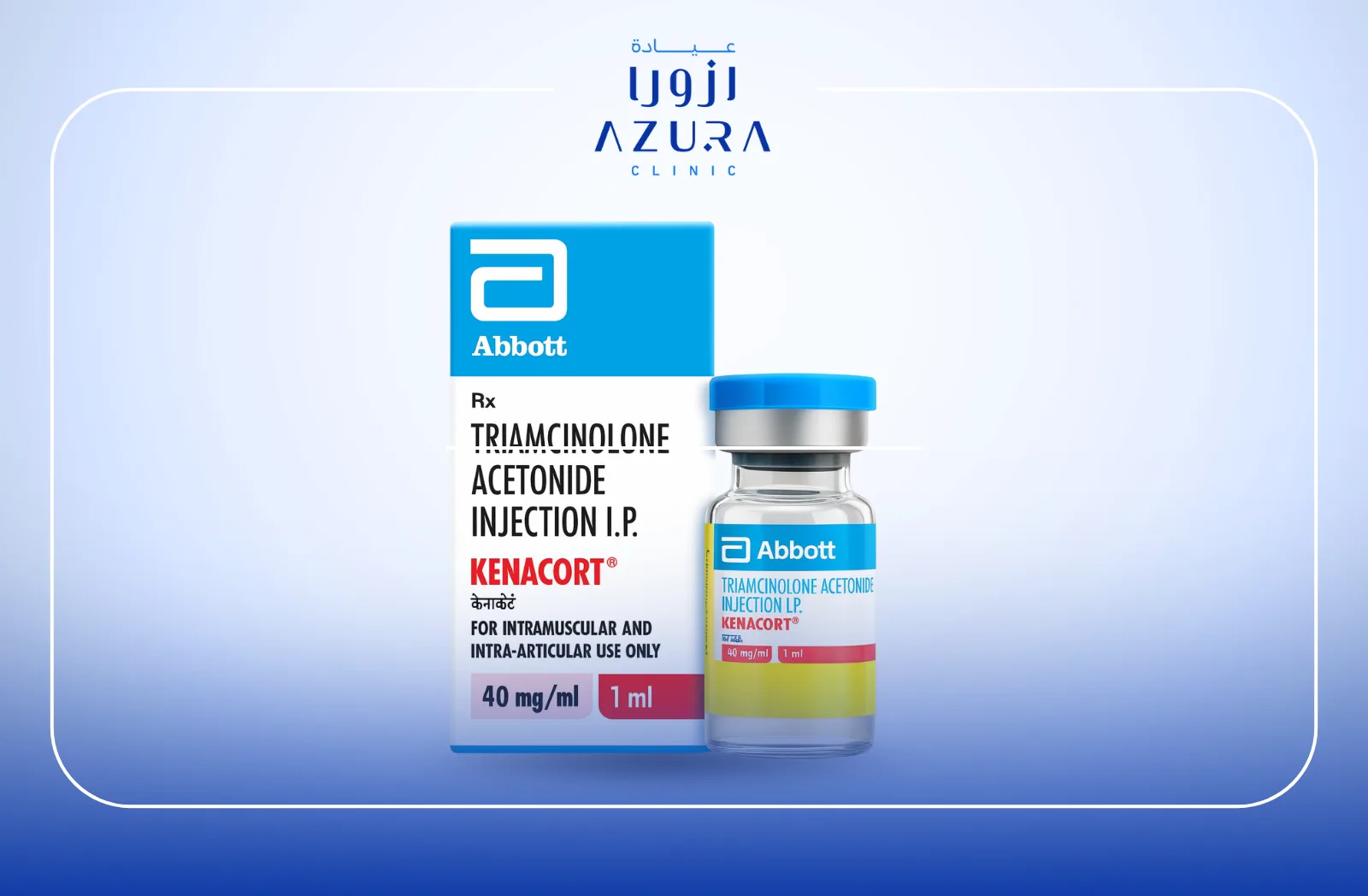
The Dermatologist's Approach to Intradermal Triamcinolone in Muscat Raised keloids, stubborn hypertrophic scars, and deep painful acne cysts are among...
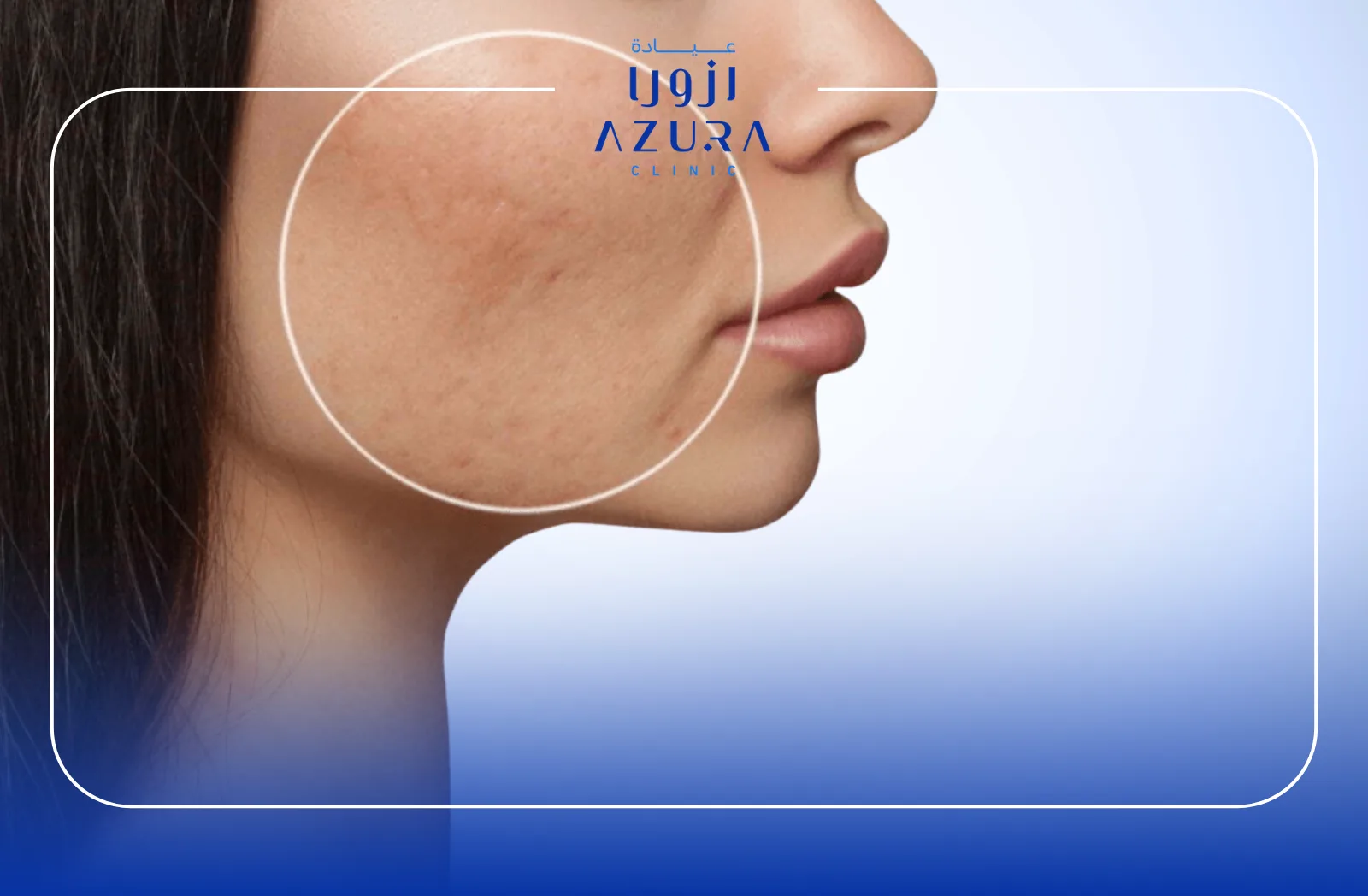
The Frustrating Challenge of Healing Scars in the Gulf Climate Whether you are dealing with deep pit marks from old...

Subcision for Acne Scars: 7 Powerful Facts Every Patient in Muscat Should Know If you've tried creams, peels, and...