Intradermal Injection Triamcinolone

Dermatologist administering triamcinolone intradermal injection at Azura Clinic Muscat
Published at 23 October 2025
Views 270
Author Matin Mirshafiei
Last Update July 2, 2026

What Is Triamcinolone Intradermal Injection?

Triamcinolone intradermal injection is a targeted corticosteroid treatment delivered directly into the affected layers of your skin. A corticosteroid is a type of anti-inflammatory medicine that your body naturally produces — this injection simply puts a concentrated dose exactly where it’s needed.

At Azura Clinic in Muscat, this treatment is used to address a range of stubborn skin conditions that don’t always respond well to creams or oral medication alone. It’s precise, effective, and administered by expert dermatologists who understand your skin.

How Does It Work?

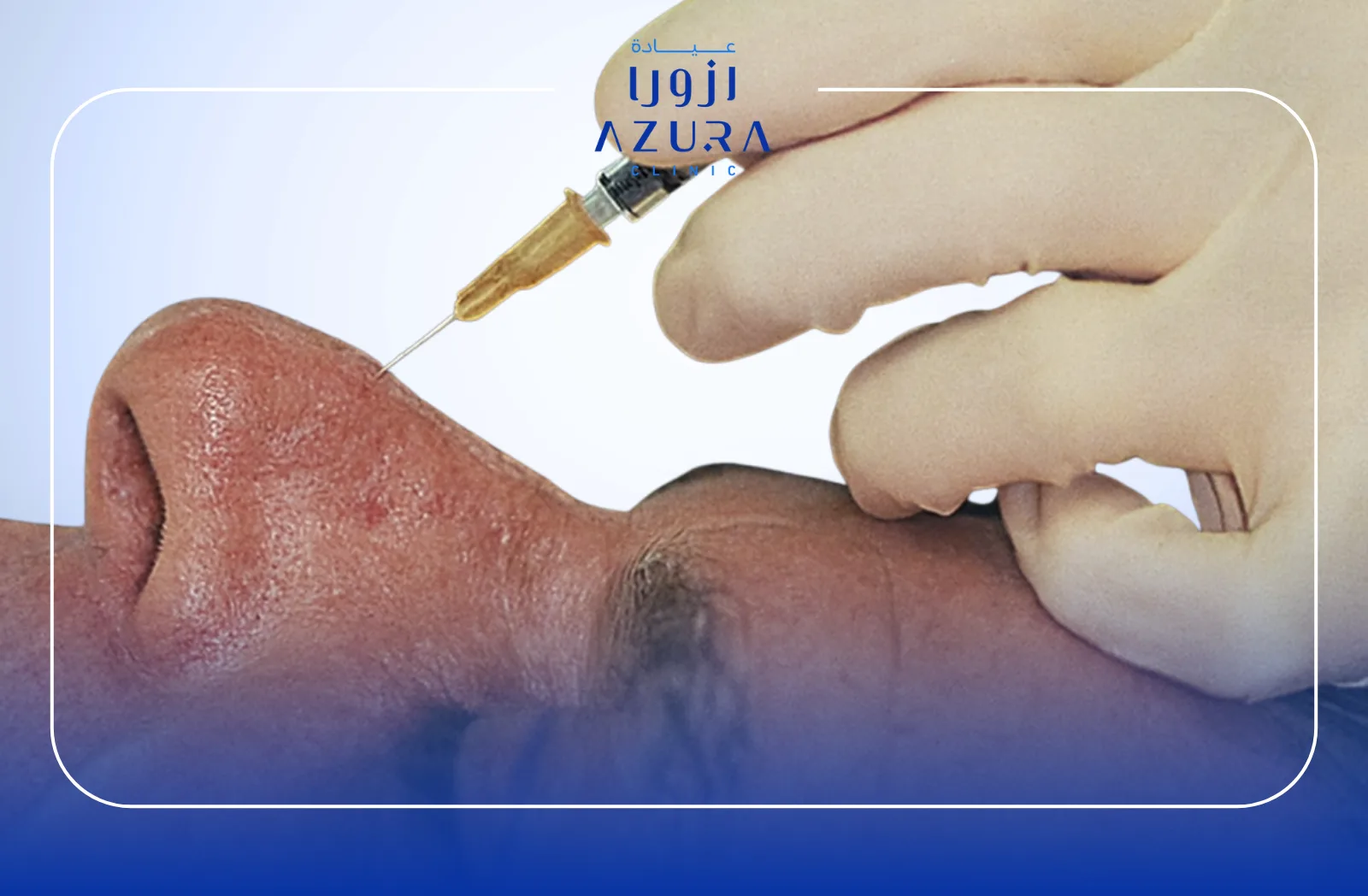
Your doctor will cleanse the treatment area, then carefully inject triamcinolone directly into the skin using a fine needle. The medication gets to work immediately, calming inflammation and reducing the overactive immune response that drives many skin conditions.

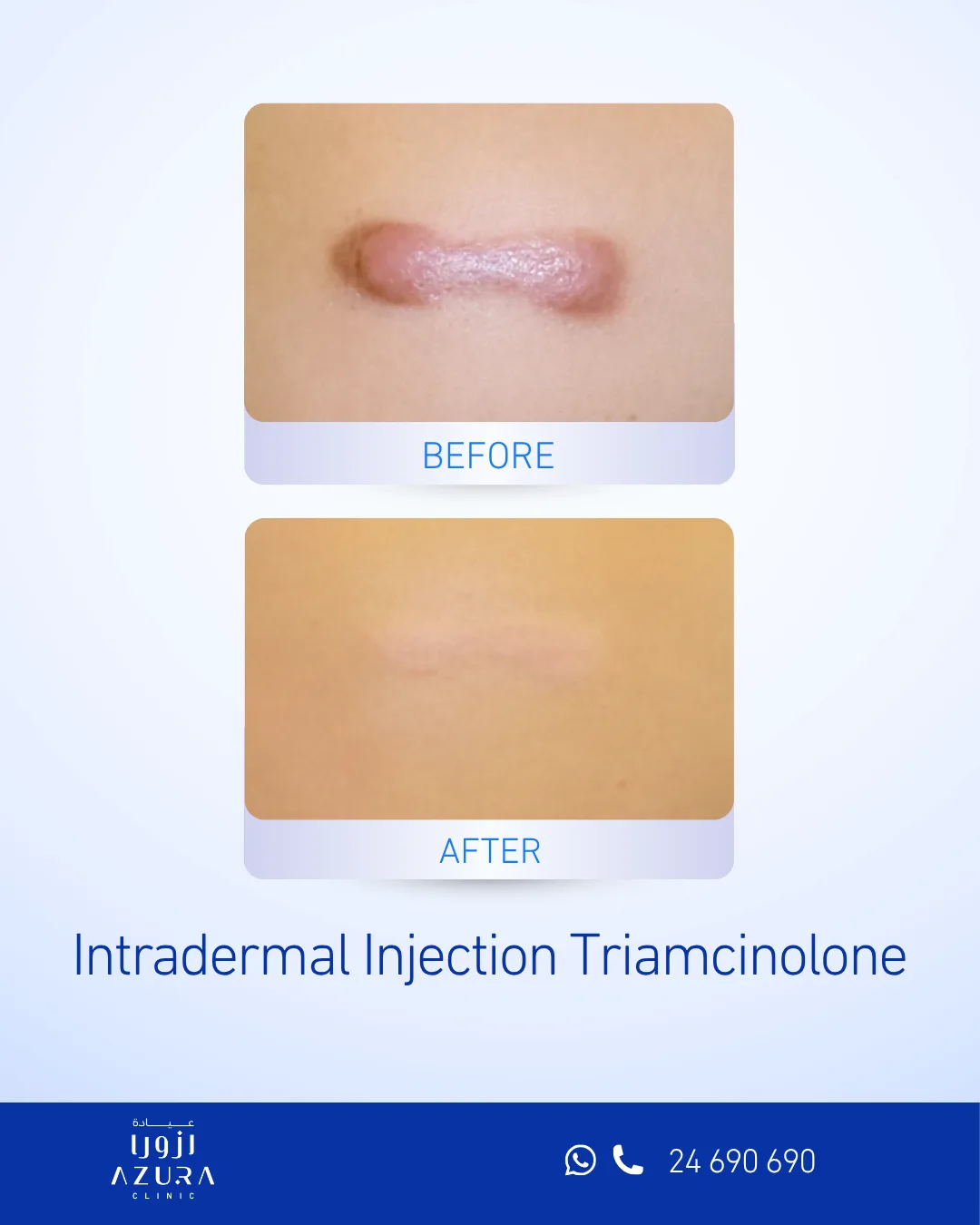
For raised scars and keloids — areas of thick, overgrown scar tissue — the injection softens and flattens the scar over time. For inflammatory conditions like eczema or psoriasis, it reduces redness, swelling, and discomfort at the source. Depending on your skin’s response, your dermatologist may recommend a course of sessions to achieve the best outcome.

Who Is a Good Candidate?

You may be a strong candidate for triamcinolone intradermal injection if you’re dealing with any of the following:

  • Keloids — raised, firm scars that grow beyond the original wound site
  • Hypertrophic scars — thick, elevated scars that stay within the wound boundary
  • Eczema — a chronic skin condition causing dry, itchy, and inflamed patches
  • Psoriasis — a condition where skin cells build up too quickly, causing scaly, red plaques
  • Localised skin inflammation that hasn’t responded to topical treatments

This treatment is suitable for most adults in Oman who have been assessed by a qualified dermatologist. Your doctor at Azura Clinic will review your medical history and current medications before recommending this approach — your safety always comes first.

For more information on how our team evaluates your suitability, visit our Our Doctors page.

What Results Can You Expect?

Most patients notice a meaningful reduction in redness, swelling, and discomfort within the first few weeks. For keloid treatment in Muscat, visible flattening of the scar typically develops gradually across multiple sessions.

Results can last for several months, particularly when paired with a consistent aftercare routine. Research published through PubMed supports intralesional corticosteroid injections as a first-line treatment for hypertrophic scars and keloids, with significant improvement rates.

Your dermatologist will track your progress and adjust the treatment plan to suit how your skin responds over time.

Why Azura Clinic in Muscat?

Azura Clinic is Muscat’s leading dermatology and aesthetics clinic — and the proud winner of the Best Brand CX, Oman 2025 award. Our dermatologists bring international expertise and a genuinely personalised approach to every patient who walks through our doors.

We use medical-grade techniques and follow strict safety protocols to ensure every intradermal injection is administered with precision. Whether you’re seeking hypertrophic scar treatment in Oman or managing a chronic skin condition, you’ll feel supported at every step.

Curious about what sets us apart? Read more on our About Us page.

Aftercare Tips

Taking care of your skin after treatment helps protect your results and reduce any mild side effects. Here’s what your dermatologist will typically advise:

  • Expect mild redness or swelling at the injection site — this usually settles within a few hours
  • Do not scratch, rub, or apply pressure to the treated area
  • Apply a broad-spectrum sunscreen daily to protect healing skin
  • Avoid harsh skincare products, exfoliants, or irritants on the area until cleared by your doctor
  • Attend all follow-up appointments — consistency is key to lasting results
  • Let your doctor know immediately if you notice unusual pain, significant swelling, or skin changes

Your Azura Clinic dermatologist will give you a tailored aftercare plan based on your specific condition and skin type. You won’t be left guessing — we guide you through every stage of your recovery.


5/5 - (44 votes)


Before / After Treatment

Before Treatment Instructions
🔷 Avoid applying any irritants or harsh products on the treatment area.
🔷 Inform your doctor about any allergies or medications you are taking.
🔷 Avoid sun exposure on the targeted area before the session.
After Treatment Instructions
🔷 Expect mild redness or swelling which usually subsides within a few hours.
🔷 Avoid scratching or rubbing the treated area.
🔷 Use sunscreen to protect your skin.
🔷 Follow your dermatologist’s advice on skincare products to use or avoid.


FAQs
1
Intradermal Injection Triamcinolone at Azura Clinic in Muscat usually ranges from OMR 15 to OMR 53, with the final cost varying by each patient’s condition, treatment needs, dosage plan, and doctor’s prescription after assessment.
2
Once injected into the targeted tissue, triamcinolone suppresses the local inflammatory signals that cause redness, swelling, and abnormal collagen build-up. For acne cysts this shrinks the lesion rapidly; for keloids and hypertrophic scars it breaks down the excess scar tissue and flattens the raised area over time. The result is a controlled, localised response without affecting the rest of your body the way a tablet would.
3
Most patients describe the sensation as a brief sting or mild pressure at the injection site, lasting only a second or two. At Azura Clinic our dermatologists work with a very fine needle and, where needed, can apply a numbing cream beforehand to keep you comfortable. The procedure itself is quick and straightforward, and virtually all patients tolerate it well without any need for downtime.
4
You may be a great candidate if you have a painful cystic acne lesion that hasn't responded to topical treatments, a keloid or hypertrophic scar from surgery or an old injury, or a localised patch of a chronic inflammatory skin condition. People who want a targeted, non-surgical option with minimal recovery time are particularly well suited to this treatment. A consultation at Azura Clinic will confirm whether your specific skin concern is appropriate for this approach.
5
Yes — active skin infections, open wounds, or known allergy to corticosteroids at the injection site are reasons to avoid this treatment. Patients who are pregnant, breastfeeding, or have poorly controlled diabetes should discuss their situation carefully with our doctor before proceeding, as corticosteroids can affect blood sugar levels. Certain autoimmune conditions or a history of skin atrophy from previous steroid use may also require extra caution.
6
Acne cysts often flatten and lose their redness within 24 to 72 hours, which is one reason this treatment is so popular before events. Keloids and raised scars respond more gradually — you may notice softening and flattening over four to eight weeks as the scar tissue remodels. Chronic inflammatory patches typically show reduced redness and itching within a couple of weeks of each session.
7
Come to your appointment with clean skin in the treatment area and avoid applying heavy makeup, creams, or oils on the day. Let your doctor know about any blood-thinning medications, supplements like fish oil or vitamin E, and any current skin products you use, as some can affect healing. If you have a history of cold sores near the treatment zone, mention it at your consultation so preventive steps can be taken.
8
Keep the treated area clean and avoid touching or scratching it for the first 24 hours. Sun protection is essential — apply a broad-spectrum SPF daily, especially important in Muscat's intense sun, as the treated skin can be more sensitive. Avoid applying any active skincare ingredients like retinoids or acids directly over the injection site until your dermatologist confirms the skin has settled.
9
The most common effects are temporary redness, minor swelling, and occasionally a small bruise around the injection site, all of which usually resolve within a few days. With repeated sessions or higher doses, there is a small risk of skin thinning (atrophy) or lightening of the skin colour (hypopigmentation) at the treated spot. At Azura Clinic our dermatologists use precise dosing techniques to minimise these risks and monitor your response between appointments.
10
This is a very valid concern for many patients in Oman and across the Gulf region, where deeper skin tones are common. Hypopigmentation — temporary lightening of the skin — can occur, but the risk is significantly reduced when the correct concentration is used and the injection is placed accurately. At Azura Clinic our dermatologists are experienced in treating all skin tones and will choose the appropriate dose and technique to protect your natural skin tone throughout the treatment.
11
Yes, and in many cases combining treatments gives better results — for example, pairing scar injections with silicone gel or laser therapy can speed up flattening of a keloid. For acne-prone skin, your dermatologist may recommend a broader treatment plan addressing oil control and bacteria alongside the injection. At Azura Clinic we take a holistic view of your skin health and will suggest complementary options based on your individual goals.
12
For most patients there is little to no downtime — you can return to work, school, or daily activities immediately after the appointment. The injection site may look slightly red or swollen for a day or two, which can usually be covered with makeup if needed. Strenuous exercise and excessive heat, such as saunas or very hot showers, are best avoided for 24 hours to allow the area to settle.
13
At Azura Clinic every triamcinolone injection is performed by a qualified dermatologist — not a therapist — ensuring clinical accuracy in placement, dosing, and patient safety. We take time during consultation to understand your skin history, concerns, and expectations before recommending any procedure. Our approach is precise, evidence-based, and tailored to your skin type, so you leave with a clear plan and realistic expectations rather than a generic protocol.
14
Triamcinolone is a corticosteroid — a powerful anti-inflammatory medication — that is injected directly into the skin to calm overactive immune responses in specific areas. In Oman's dermatology clinics it is most commonly used to treat stubborn acne cysts, raised scars called keloids or hypertrophic scars, and inflammatory skin conditions like psoriasis plaques or lichen planus. Because the medication is delivered precisely to the problem site, it works more effectively and with fewer whole-body effects than oral steroids.
Comments

Leave a Reply

Your email address will not be published. Required fields are marked *