Laser Removal of Warts, Moles & Skin Tags

Fotona laser wart mole and skin tag removal treatment at Azura Clinic Muscat
Published at 29 September 2025
Views 421
Author Matin Mirshafiei
Last Update July 16, 2026

What Is Laser Wart, Mole & Skin Tag Removal?

Unwanted skin growths — whether a stubborn wart, a raised mole, or a skin tag rubbing against your collar — can affect how you feel about your skin every single day. The good news is that removing them no longer means surgery, stitches, or lengthy recovery.

At Azura Clinic in Muscat, we use the Fotona laser — one of the most advanced medical laser systems available — to safely eliminate these lesions with precision. It’s a non-surgical approach that respects your surrounding skin and gets you back to your routine quickly.

How Does It Work?

The Fotona laser delivers a controlled beam of light energy directly onto the lesion. This energy ablates (vaporizes) the unwanted tissue layer by layer, while simultaneously sealing tiny blood vessels to minimize bleeding and reduce infection risk.

Your treatment at Azura Clinic follows a clear, four-step process:

  1. Consultation: One of our dermatology-trained doctors examines your lesion and confirms it is safe and suitable for laser removal. Any suspicious lesion is assessed carefully before proceeding.
  2. Preparation: The area is cleansed, and a numbing cream or local anaesthetic is applied so you stay comfortable throughout.
  3. Laser Treatment: The Fotona laser precisely targets and removes the lesion, sterilizing the site as it works.
  4. Healing: A small scab typically forms and falls away naturally within 7–10 days, revealing clearer skin beneath.

The number of lesions and their size will determine how your treatment is planned. Your doctor will walk you through everything during your consultation.

Who Is a Good Candidate?

Laser wart, mole, and skin tag removal in Muscat is suitable for a wide range of patients. You may be a good candidate if you have:

  • Common or plantar warts that haven’t responded to over-the-counter treatments
  • Skin tags on the neck, eyelids, underarms, or groin that cause irritation or discomfort
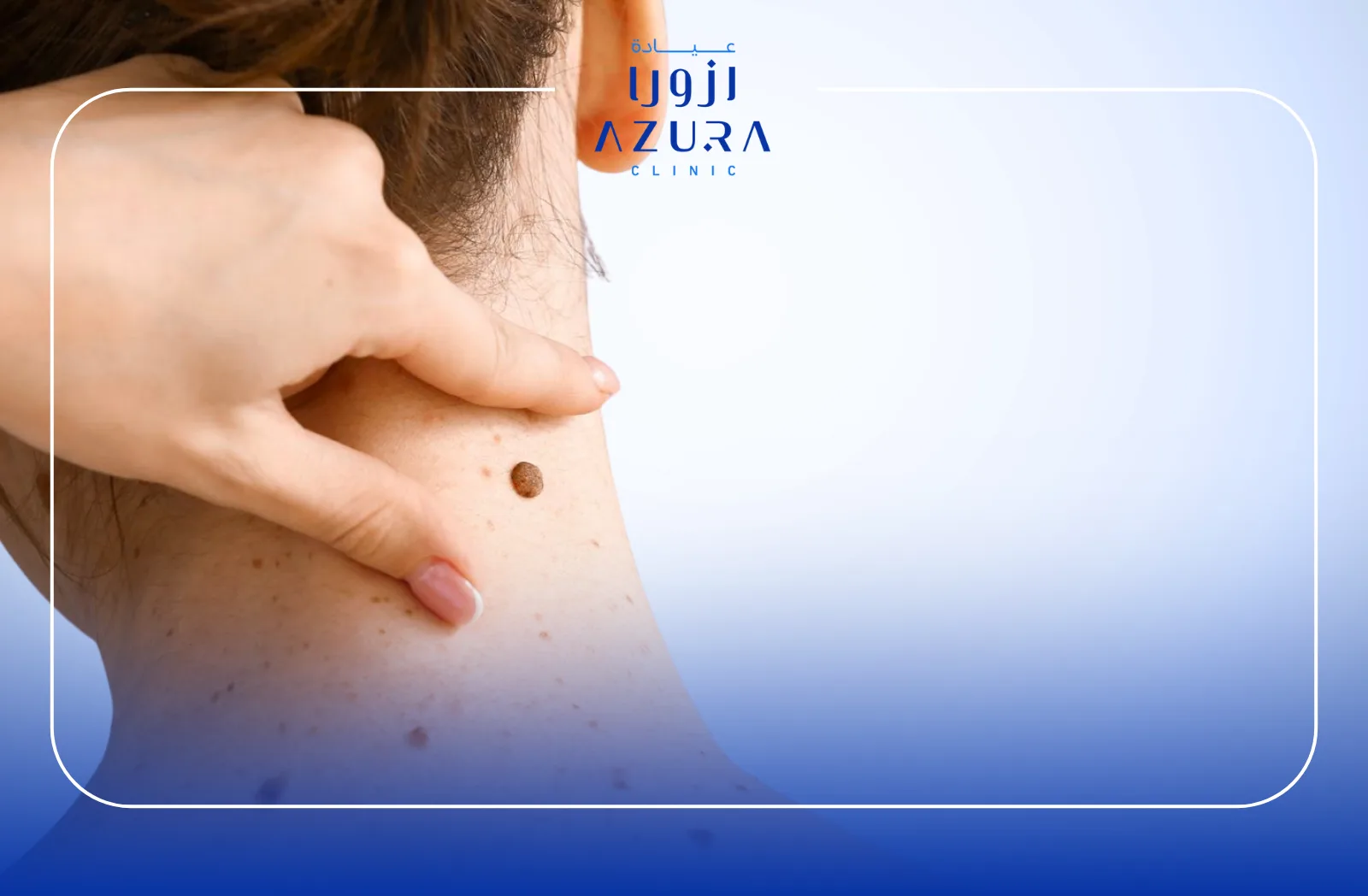
  • Benign (non-cancerous) moles that bother you cosmetically
  • Any lesion previously assessed and cleared by a medical professional

The Fotona laser works safely across all skin types, which makes it a trusted option for patients across Oman. However, not every lesion is automatically suitable for laser removal. Any mole or growth that looks irregular, has changed in shape, or is causing unusual symptoms will be thoroughly assessed first — your safety always comes before cosmetic concerns.

According to the American Academy of Dermatology, any changing or atypical mole should be evaluated by a dermatologist before any removal procedure.

What Results Can You Expect?

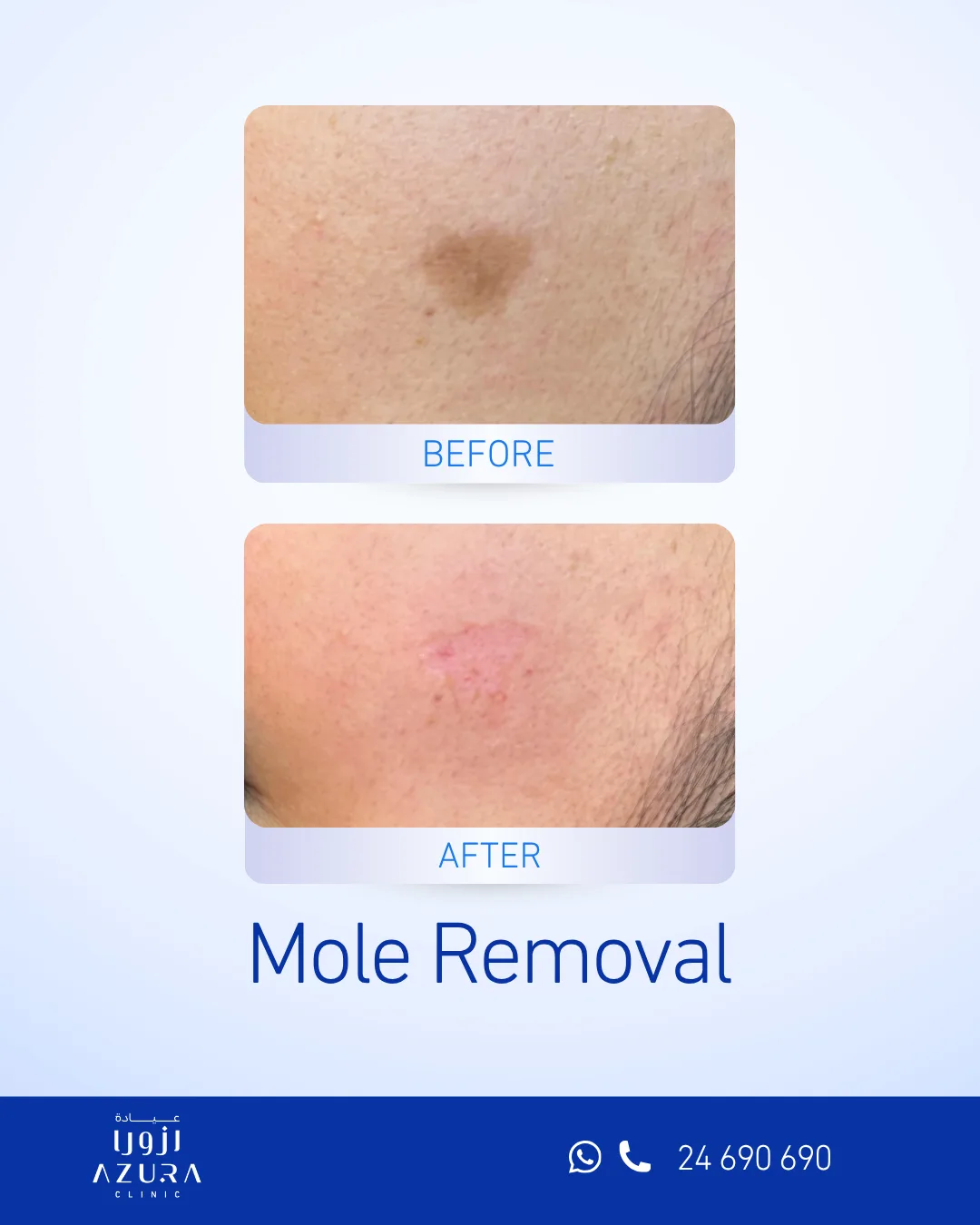
Most patients see a clean, smooth result once healing is complete — typically within one to two weeks. The Fotona laser’s precision means minimal damage to the surrounding skin, which significantly reduces the risk of scarring compared to traditional surgical removal.

For warts, particularly stubborn plantar warts, more than one treatment session may be recommended. Your doctor will set realistic expectations from your very first appointment — no surprises.

Why Azura Clinic in Muscat?

Azura Clinic is proud to be recognised as Oman’s Best Brand CX 2025 — an award that reflects the standard of care every single patient receives. When it comes to laser wart removal in Muscat, mole removal, or skin tag treatment, we combine medical expertise with technology that is genuinely best-in-class.

Our team of certified laser practitioners and dermatology-trained clinicians take the time to understand your skin, your concerns, and your goals. We use the Fotona SP Dynamis system — a platform trusted by dermatologists worldwide for its accuracy, safety, and consistent results.

If you’re looking for non-surgical mole removal in Oman with a clinic that genuinely puts your outcome first, Azura Clinic is where you belong.

Aftercare Tips

Good aftercare makes a real difference to your healing. Here is what we recommend following your Fotona laser skin lesion removal:

  • Keep the treated area clean and dry for the first 24 hours
  • Apply any antiseptic or prescribed ointment your doctor provides, daily
  • Do not pick, scratch, or rub the scab — let it fall away on its own
  • Avoid makeup, shaving, or exfoliating over the area for 7–10 days
  • Apply SPF 50+ sunscreen if the area is exposed to sunlight
  • Avoid active skincare ingredients like retinol or acids on the area until fully healed

Before your treatment, avoid sun exposure or tanning beds for two weeks, and let your doctor know about any medications, skin conditions, or recent illnesses. Full healing typically completes within one to two weeks, depending on your skin type and the size of the lesion treated. You can find answers to common questions on our FAQ page.


5/5 - (54 votes)


Before / After Treatment

Before Treatment Instructions
🔹 Avoid sun exposure or tanning beds for 2 weeks before treatment.
🔹 Do not apply active skincare (retinols, acids) to the treatment area for 3 days.
🔹 Inform your provider of any blood thinners, skin conditions, or recent illnesses.
🔹 Shave the area if hair is present (except on the face).
After Treatment Instructions
🔹 A mild redness or scab may form — do not pick or scratch the area.
🔹 Keep the area clean and dry for 24 hours.
🔹 Apply antiseptic or prescribed ointment daily.
🔹 Avoid makeup, shaving, or exfoliating over the treated area for 7–10 days.
🔹 Use SPF 50+ if the area is sun-exposed.
🔹 Healing usually completes in 1–2 weeks, depending on your skin type.


Before and After Instructions (PDF) – Click to Download


FAQs
1
Laser Removal of Warts, Moles & Skin Tags at Azura Clinic in Muscat usually ranges from OMR 25 to OMR 80, with the final cost varying by the size, number of lesions, treatment needs, and doctor’s assessment.
2
The laser delivers focused energy that heats and breaks down the cells within the lesion, causing it to shrink and fall away during healing. For warts, it also targets the blood vessels feeding the growth, cutting off its supply and preventing regrowth. Skin tags simply detach cleanly as the tissue is eliminated. The process is controlled and targeted, meaning healthy skin around the lesion is left largely undisturbed.
3
Most patients at Azura Clinic describe the sensation as a mild sting or snap — similar to a rubber band flick — which lasts only a fraction of a second per pulse. Depending on the size and location of your lesion, we apply a topical numbing cream or a local anesthetic injection beforehand to keep you comfortable throughout. Patients with a low pain threshold have generally found the experience much more manageable than they expected.
4
You will notice the lesion is gone immediately after treatment, though the area will look red and may form a small scab in the days that follow — this is a normal part of healing. Most patients see the treated skin looking smooth and settled within two to four weeks, once the scab has naturally fallen away. Final skin tone and texture continue to refine over the following weeks.
5
Scarring risk with Fotona laser is significantly lower than with surgical cutting or older ablative methods, because the laser offers very precise control over depth and area treated. Most patients are left with either no visible mark or a very faint, temporary pinkness that fades as the skin matures. Darker skin tones may experience temporary pigment changes, which is something our clinicians at Azura Clinic will discuss with you in advance.
6
Good candidates are adults with benign (non-cancerous) lesions that have been assessed and cleared as safe for removal. If you have a lesion that is cosmetically bothersome, has caught on clothing, or causes irritation, you are likely a suitable candidate. Before any treatment at Azura Clinic, a clinician will examine your lesion to confirm it is benign and appropriate for laser removal rather than surgical biopsy.
7
Laser removal is not suitable for lesions that show signs of being potentially cancerous — such as moles with irregular borders, uneven colour, or recent unexplained changes in size or shape. In those cases, surgical removal with a laboratory analysis of the tissue is the safer route. Laser treatment is also approached with extra care during pregnancy, in patients on certain blood-thinning medications, or in those with active skin infections near the treatment site.
8
Yes — the Fotona system is well suited to delicate areas of the face, including the eyelids, nose, and around the lips, as well as the neck and other sensitive regions. Its precision allows clinicians to treat lesions very close to sensitive structures without compromising safety. At Azura Clinic, our clinicians are trained specifically in facial aesthetics and take additional care when working near the eyes or other sensitive zones.
9
In the days leading up to your appointment, avoid prolonged sun exposure on the treatment area and do not apply self-tanner. Let your clinician know about any medications you are taking, particularly blood thinners or retinoids (Vitamin A derivatives), as some may need to be paused. Arrive with clean skin — no creams, makeup, or lotions on the area being treated.
10
Keep the treated area clean and gently moisturised with whatever product your clinician recommends, and avoid picking or scratching the scab — letting it fall away on its own gives the best cosmetic outcome. Protect the area from direct sun exposure during healing, as fresh skin is more vulnerable to pigmentation changes; a broad-spectrum SPF is essential. Azura Clinic will provide you with specific aftercare instructions tailored to your skin type and the lesion treated.
11
Laser removal of warts, moles, and skin tags requires no significant downtime — you can return to your regular routine, including work, the same day in most cases. The treated area will likely look red and may have a small crust or scab, which some patients prefer to cover with a small plaster for a few days. Strenuous exercise and activities that cause heavy sweating are best avoided for a day or two to support clean healing.
12
For skin tags and most benign moles, laser removal is permanent — once the tissue is gone, it does not regenerate. Warts are caused by the human papillomavirus (HPV), which means there is a small possibility of recurrence if the virus remains active in the surrounding skin, though the laser does target the blood supply that feeds the wart to reduce this risk. Your clinician at Azura Clinic will advise you on what to watch for and when to return if needed.
13
Azura Clinic specialises in medical aesthetics and uses the Fotona laser — a clinically recognised system trusted internationally — operated by trained clinicians who assess every lesion carefully before treatment. We take safety seriously: no lesion is treated without a proper examination to rule out the need for a dermatological biopsy first. Our team will also guide you on realistic results, aftercare, and any follow-up, so you feel informed and supported throughout.
14
Fotona laser removal uses a precisely controlled beam of light energy to target and destroy the tissue of unwanted skin lesions — including warts, moles, and skin tags — without damaging the surrounding skin. The laser essentially vaporizes the lesion layer by layer, allowing your skin to heal cleanly in its place. At Azura Clinic in Muscat, we use the Fotona system because of its reputation for precision and consistent results across all skin types.
Comments

Leave a Reply

Your email address will not be published. Required fields are marked *